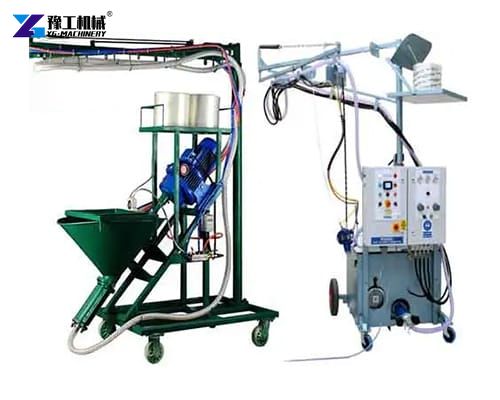
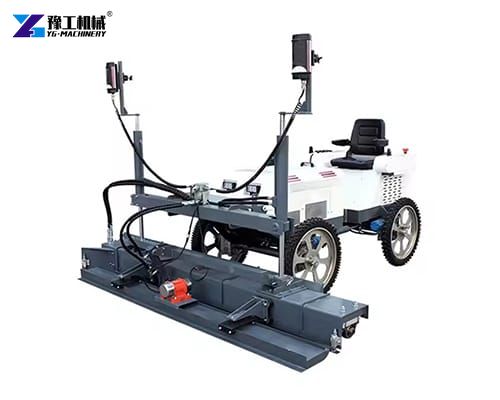
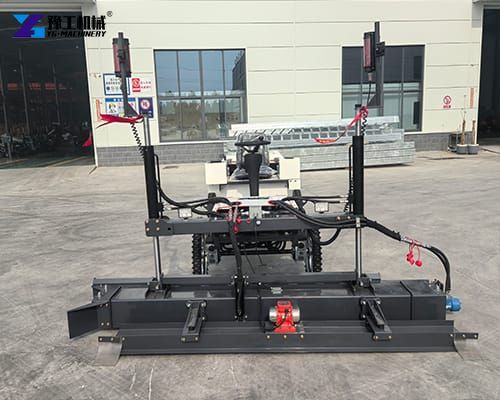
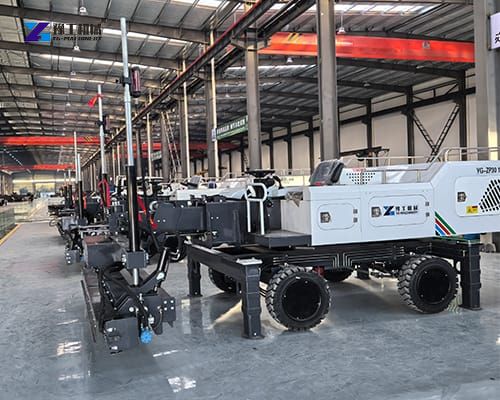
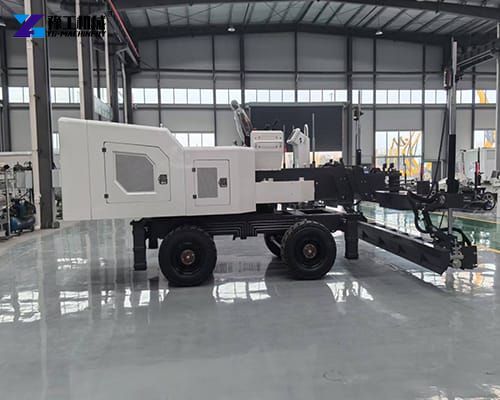
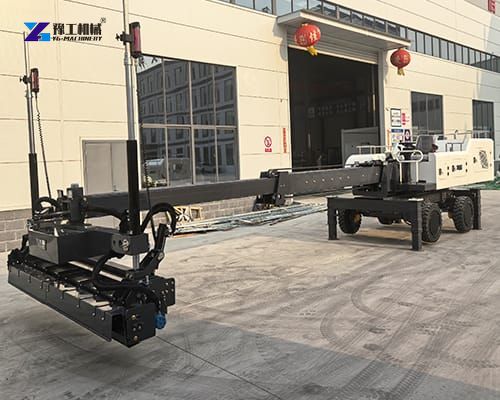
Concrete laser screed machine is a piece of self-propelled construction equipment used to level and vibrate freshly poured concrete. Unlike traditional manual methods or vibrating strike-offs, these machines utilize sophisticated laser-guided technology to ensure the finished surface meets specific flatness and levelness requirements, often referred to as F-Numbers (FF for flatness and FL for levelness). The core mechanism involves a telescopic boom or a drive-in frame equipped with a screed head. This head typically integrates an auger to remove excess concrete, a vibrator to consolidate the material, and a leveling blade to smooth the surface. All these components are synchronized by a laser control system.
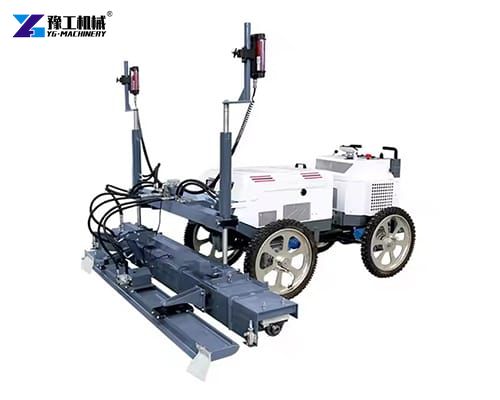
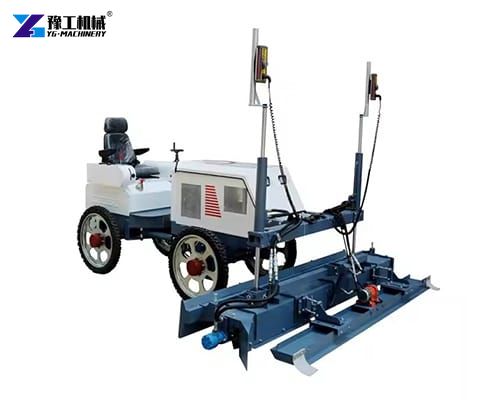
Concrete Laser Screed Machine Specifications
| Model | YG-CL300 | YG-CL300A | YG-ZP30 |
| Engine model | Briggs & Stratton 38E3/LONCIN/Honda 690 (optional) | Briggs & Stratton 38E3/LONCIN/Honda 690 (optional) | Yanmar 4TNV94L |
| Engine type | Gasoline, air-cooled 4-stroke, twin-cylinder engine | Gasoline, air-cooled 4-stroke, twin-cylinder engine | Diesel |
| Engine power | 22KW/30ps | 22.8KW/23ps/31ps | 35.5KW/48hp |
| Fuel capacity | 20L (operation time is about 8 hours | 20L (operation time is about 8 hours | 100L |
| Hydraulic oil capacity | 37L | 35L | 150L |
| Laser transmitter | Swiss Leica/Tower transmitter (optional) | Swiss Leica/Tower transmitter (optional) | Danfoss |
| Laser receiver | Swiss Leica/Tower receiver (optional) | Swiss Leica/Tower receiver (optional) | American Tempo |
| Laser system control effect | Plane, slope, double slope (three-dimensional) | Plane, slope, double slope (three-dimensional) | German Mopar |
| Laser system control method | Microcomputer laser scanning | Microcomputer laser scanning | Flat, inclined or double slope (3D) |
| Paving method | Hydraulic stirring cage paving | Hydraulic stirring cage paving | Microcomputer laser scanning |
| Vibration method/excitation force | Hydraulic vibration/2000N | Hydraulic vibration/2000N | Hydraulic Cage Paving |
| Vibration plate width | 2500mm | 3000mm | Hydraulic motor |
| Leveling thickness | 50-300mm | 60-300mm | Flip up and down for easy cleaning, left and right switching, blades made of highly wear-resistant material, more durable |
| Travel drive | Reducer motor integrated | Reducer motor integrated | 6000mm |
| Travel speed | 0-4Km/h (speed adjustable) | 0-4Km/h (speed adjustable) | 3100mm |
| Travel tire | Solid anti-skid and anti-puncture tires (optional wide tires) | Solid anti-skid and anti-puncture tires (optional wide tires) | 100-450mm |
| Body size | 3250x2850x1320mm | 3300x3460x1650mm | 4-8km/h 24m/min |
Main Components of a Laser Screeding System
- The Screed Head
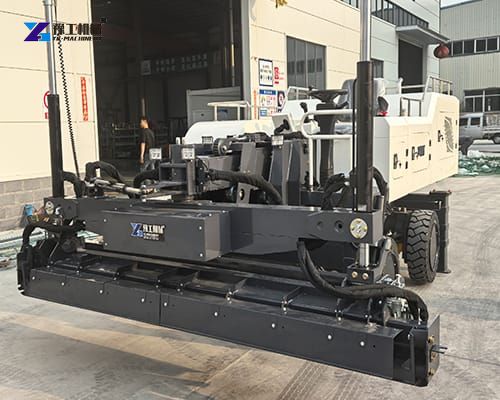
This is the business end of the concrete laser screed machine. It usually consists of a plow to move the bulk concrete, an auger to cut the grade precisely, and a vibratory element. High-quality screed heads are made from lightweight yet durable alloys to prevent sinking into the wet concrete. - The Power Unit
Modern machines are typically powered by reliable diesel or gasoline engines. These engines drive the hydraulic systems that control both the machine’s movement and the precision of the screed head. - The Undercarriage
Depending on the job site, machines may feature wheels or tracks. Four-wheel drive and all-wheel steering are common features, allowing for high maneuverability in tight spaces or around columns.
How Does the Laser Guidance System Work?
The “magic” of the concrete laser screed machine lies in its ability to maintain perfect accuracy over vast areas. This is achieved through a three-part system:
- The Laser Transmitter: A stationary unit is set up outside the pour area. It emits a rotating 360-degree laser beam that establishes a constant grade reference across the entire job site.
- The Laser Receivers: Mounted on the screed head of the machine, these sensors constantly pick up the signal from the transmitter.
- The Control System: If the screed head deviates even a fraction of a millimeter from the reference beam, the onboard hydraulic system automatically adjusts the height of the screed head.
- By using this continuous feedback loop, the machine compensates for uneven subgrades or changes in concrete consistency, ensuring the finished slab is perfectly level according to the pre-set elevation.
Applications in Modern Construction
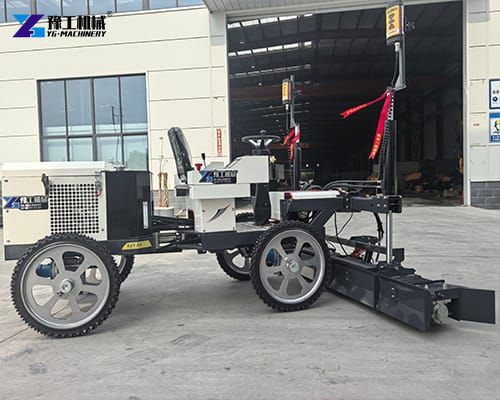
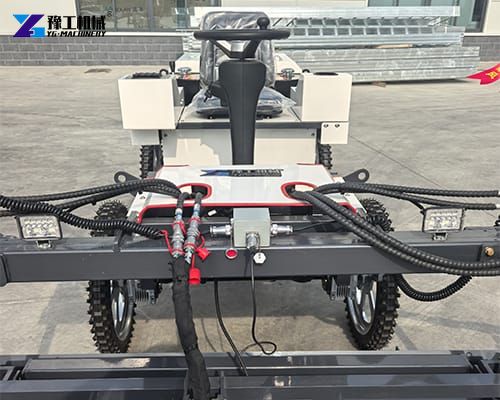
The versatility of the concrete laser screed machine makes it suitable for a wide range of applications:
- Industrial Warehouses: Providing the precision needed for automated storage and retrieval systems.
- Commercial Malls: Ensuring a smooth base for high-end tiling or polished concrete finishes.
- Cold Storage Facilities: Where floor flatness is essential for the stability of high-reaching racking systems.
- Airports and Hangars: Creating vast, durable surfaces capable of supporting heavy aircraft.
- Multi-Story Buildings: Utilizing lightweight models to level floors in high-rise constructions.
Advantages of Using A Concrete Laser Screed Machine
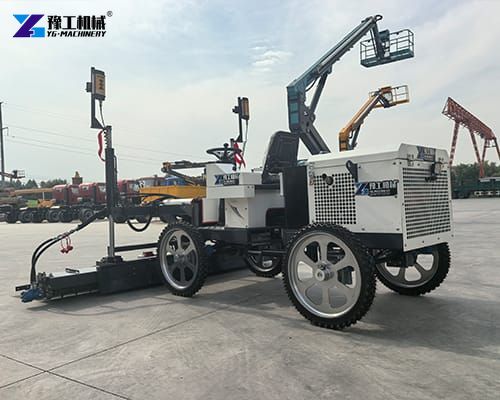
- Superior Floor Flatness
Laser-guided technology ensures high precision leveling. The finished concrete floor achieves excellent flatness and levelness, reducing the need for additional grinding or correction work. - Increased Efficiency
A concrete laser screed can level thousands of square meters in a single day, significantly improving productivity. This allows contractors to complete projects faster and take on more work. - Reduced Labor Costs
Traditional concrete leveling requires multiple workers using manual tools. With a concrete laser leveling machine, fewer operators are needed, lowering overall labor expenses. - Improved Concrete Quality
The vibrating screed head enhances concrete compaction, eliminating air pockets and increasing density. This results in stronger, more durable floors with longer service life. - Consistent Slab Thickness
Automatic height adjustment ensures uniform slab thickness across the entire surface, minimizing material waste and structural inconsistencies. - Enhanced Safety
Automation reduces physical strain on workers and decreases the likelihood of human errors or accidents during leveling operations.
Working Process of the Concrete Laser Screed
The operation of a concrete laser screed machine involves several coordinated steps.
- First, the construction team sets up the laser transmitter at a designated reference point. The transmitter establishes a horizontal plane across the job site.
- Next, freshly mixed concrete is poured onto the prepared base. The machine moves across the surface while the auger distributes the concrete evenly.
- The laser receiver detects elevation differences and sends signals to the control system. The hydraulic system adjusts the screed head height automatically, ensuring accurate leveling.
- Simultaneously, the vibrating plate consolidates the concrete, eliminating voids and enhancing surface density.
- Finally, the machine leaves behind a smooth and level surface that requires minimal manual finishing.
Types of Concrete Laser Leveling Machine
There are different models of concrete laser screed machines designed to meet various project requirements.
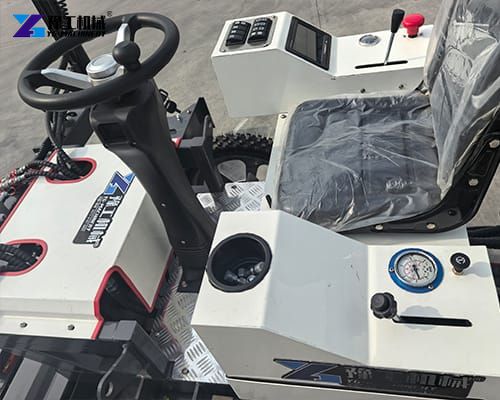
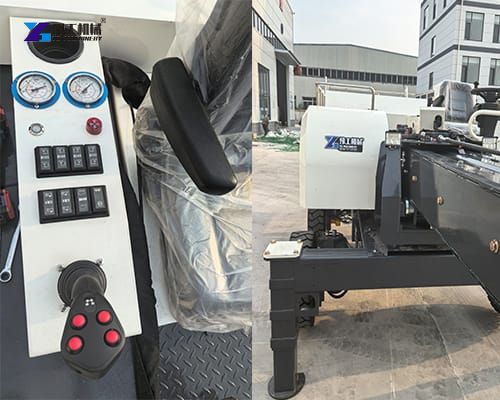
- Ride on Concrete Laser Screed Machine
Ride-on models provide greater efficiency and are ideal for large-scale industrial flooring projects. The operator sits on the machine, improving comfort and productivity. - Telescopic Boom Concrete Laser Screed
Equipped with an extendable boom, this model can cover wide screeding widths and reach difficult areas without repositioning frequently. - Four Wheel Drive Laser Concrete Screed
Designed for challenging terrains, this model ensures stable movement and consistent performance on uneven surfaces.
Choosing the Right Concrete Laser Screed
Selecting the appropriate concrete laser screed depends on several factors.
- Project Size
Large warehouses and factories require high-capacity telescopic boom models, while smaller projects may benefit from compact ride-on machines. - Flatness Requirements
Projects with strict flatness standards should prioritize advanced laser control systems with precise calibration. - Power And Engine Performance
Reliable engines ensure continuous operation without interruptions. Fuel efficiency and low maintenance are important considerations. - Screed Width
Wider screed heads improve efficiency for large areas, reducing project time.
Maintenance and Care of Concrete Laser Screed Machine
Proper maintenance extends the lifespan of a concrete laser screed machine and ensures optimal performance.
- Regular Cleaning
Remove concrete residue from the screed head and moving parts after each use to prevent buildup. - Hydraulic System Inspection
Check hydraulic hoses and connections regularly to avoid leaks and ensure stable operation. - Laser Calibration
Verify the accuracy of the laser system before each project to maintain leveling precision. - Storage
Store the machine in a dry and secure location to prevent corrosion and damage.