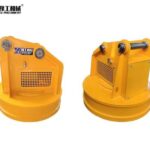
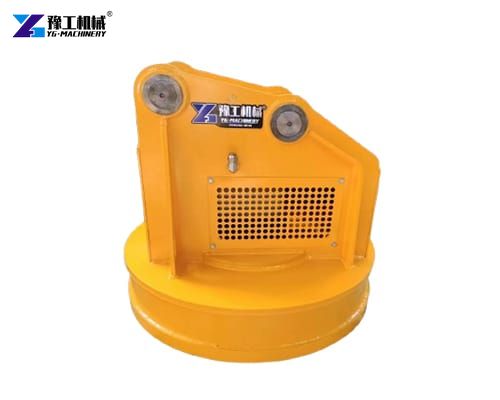
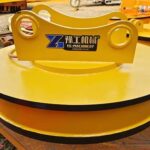
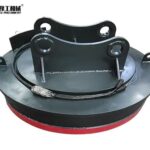
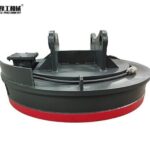
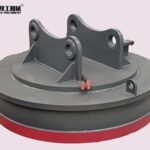
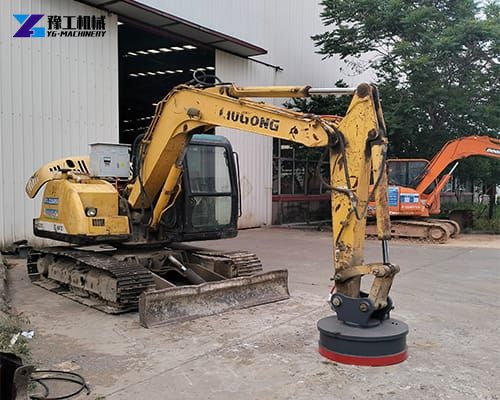
Excavator scrap magnet is a heavy-duty lifting tool specifically engineered to handle ferromagnetic materials like iron, steel, and cast iron. Different from manual sorting or traditional mechanical grapples, these magnets use magnetic force to attract and hold metal objects. By attaching directly to the arm or “stick” of an excavator, they leverage the machine’s mobility and hydraulic reach to clear sites, load trucks, and feed shredders with unparalleled ease. In the context of the global circular economy, these tools are not just accessories; they are essential drivers of profitability. They allow operators to recover every gram of valuable metal from a pile of mixed waste, ensuring that nothing of value goes to the landfill.
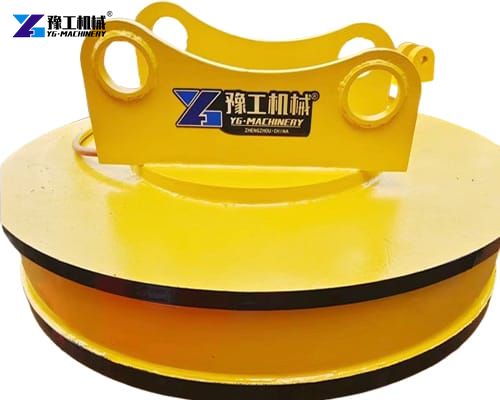
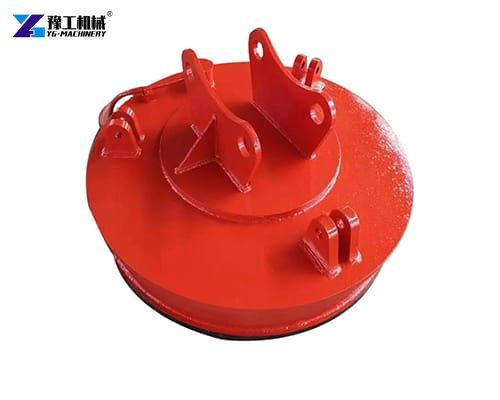
Excavator Scrap Magnet Specifications
| Model | Current/Voltage | Power/KW Current (A) | Dimensions | Duty Cycle | Weight | Feeding Parameters/Reinforcement Bar Ends |
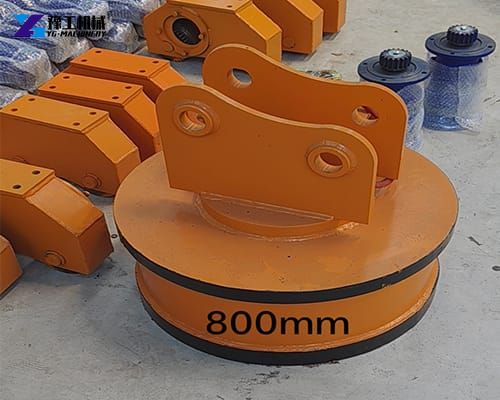
| MW5-70L | 30/220 | 3KW 15A | 70/260/300 | 75% | 0.5T | 300 kg |
| MW5-80L | 30/220 | 4KW 18A | 80/260/300 | 75% | 0.7T | 400 kg |
| MW5-90L | 40/220 | 6KW 26.6A | 90/260/300 | 75% | 0.9T | 500 kg |
| MW5-100L | 40/220 | 7KW 30.6A | 100/260/300 | 75% | 1T | 600 kg |
| MW5-110L | 40/220 | 8KW 35A | 110/260/300 | 75% | 1.2T | 800 kg |
| MW5-120L | 50/220 | 10KW 41A | 120/260/300 | 75% | 1.3T | 1 T |
| MW5-130L | 50/220 | 12kw 45A | 130/260/300 | 75% | 1.6T | 1.2 T |
| MW5-150L | 60/220 | 15kw 72A | 150/300/340 | 75% | 2.2T | 1.7 T |
| MW5-165L | 60/220 | 16kw 75A | 165/300/340 | 75% | 2.8T | 2.3 T |
| MW5-180L | 90/220 | 22kw 102A | 180/320/370 | 75% | 3.3T | 3 T |
| MW5-210L | 130/220 | 28kw 162A | 210/320/370 | 75% | 4T | 4 T |
Features of Excavator Scrap Magnet
- High magnetic lifting force
- Industrial-grade electromagnetic coils
- Heavy duty wear resistant shell
- Shock resistant internal structure
- Fast magnetization and demagnetization
- Compatibility with multiple excavator sizes
- Energy efficient power systems
- Remote control operation capability
Diverse Applications in Industry
- Scrap Yards and Recycling Centers
This is the primary home of the scrap magnet. It is used to unload incoming trucks, sort steel grades, and move bulk scrap into balers or shearers. - Demolition Sites
After a building is brought down, the debris is a mess of concrete and rebar. A magnet is the most efficient way to “mine” the rebar out of the rubble, cleaning the concrete for crushing and reclaiming the steel for sale. - Steel Mills and Foundries
In high-temperature environments, excavator scrap magnet is used to charge furnaces with scrap metal. Specialized heat-resistant versions are required for this task to ensure the magnetic field doesn’t fail near the molten metal. - Railway Maintenance
Discarded spikes, plates, and rail sections are heavy and awkward. A magnet enables a rail-mounted excavator to clear the tracks during maintenance windows quickly.
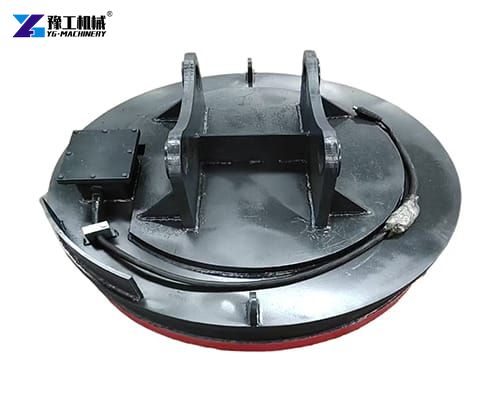
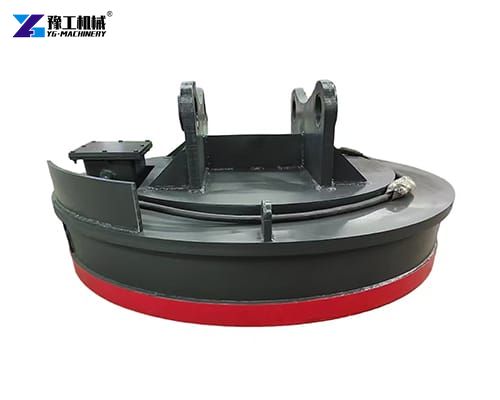
Structural Core Components
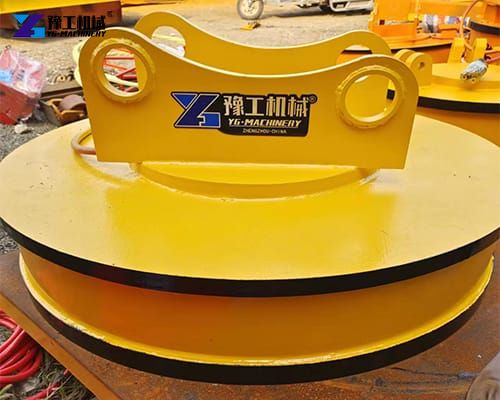
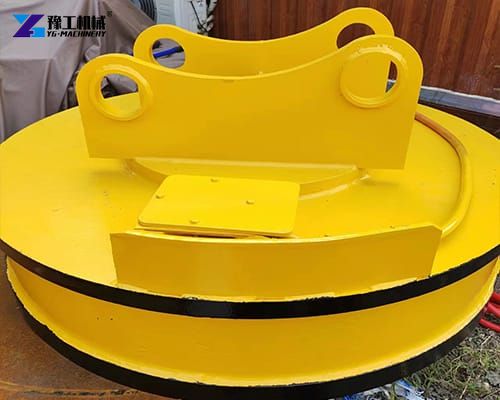
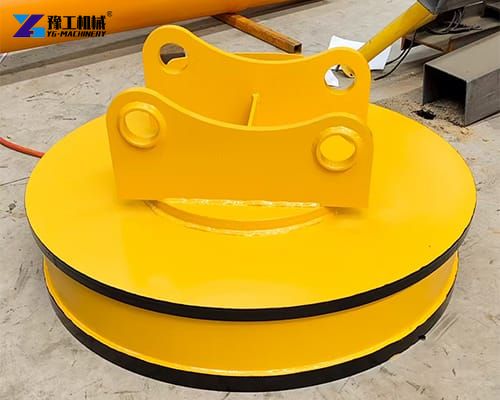
- Internal Coil: Usually made of aluminum or copper wire. Aluminum is often preferred in scrap magnets because it is lighter, allowing the excavator to lift more scrap and less “weight” of the magnet itself.
- The Magnet Body: A thick, heavy-duty casting that acts as the housing. It provides the magnetic circuit and protects the coil.
- Bottom Plate: A high-manganese steel plate that is non-magnetic. This plate prevents the magnet from sticking to itself while protecting the coils from being punctured by sharp scrap.
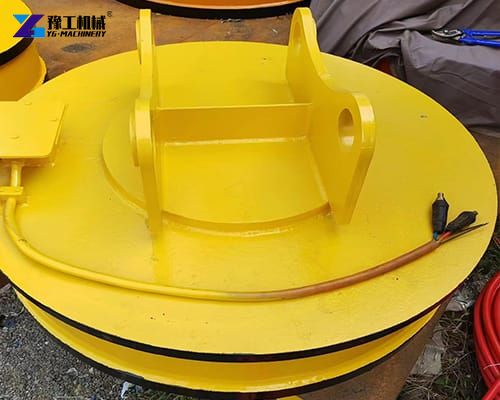
- Control Box: The “brain” of the system, which manages the DC power flow and handles the “reverse current” cycle used to drop the load quickly.
How Does It Work? – The Principles of Operation
- The operation of an excavator scrap magnet relies on the fundamental principle of electromagnetism. When an electric current flows through a wire, it creates a magnetic field.
- Excitation: When the operator triggers the switch in the cab, DC power is sent to the magnet coil. This creates a powerful magnetic field that flows through the steel body and out through the bottom.
- Attraction: Ferrous materials within the field’s reach become temporarily magnetized and are pulled toward the magnet’s base.
- Transport: The operator moves the excavator arm to the desired location (e.g., a truck bed or a pile).
Advantages of Using A Magnet Attachment
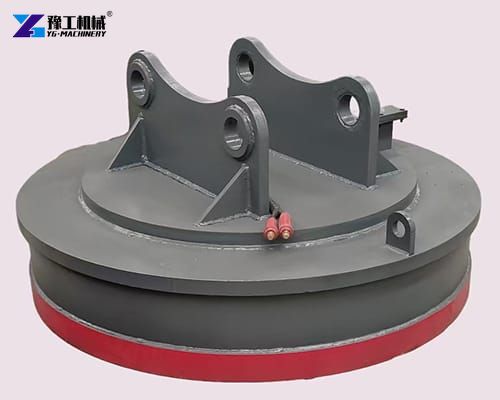
- Cleanliness: A magnet picks up small “fines,” nuts, bolts, and metal shavings that a grapple would miss. This keeps the yard floor clean and prevents tire punctures on other equipment.
- Speed: Loading a truck with a magnet is often 30 percent faster than using a grapple because there is no need to “clamp” or “aim” precisely; you simply hover over the pile.
- Safety: Because the magnet can pick up metal from a distance, ground workers do not need to be as close to the debris pile.
- Purity: It provides an immediate “test” of material. If it doesn’t stick, it isn’t iron or steel, making it easy to separate non-ferrous contaminants.
Critical Factors for Selection and Buying
Purchasing an excavator scrap magnet is a significant investment. Consider these variables before making a choice:
- Excavator Lifting Capacity
The weight of the magnet plus the weight of the expected load must never exceed the safe lifting limit of the excavator at full reach. Using a magnet that is too heavy will cause the excavator to tip or cause premature wear on the hydraulic pins. - Material Type
If you are handling heavy “prepared” scrap, you need a magnet with deep penetration. For thin “shredder” scrap or turnings, a magnet with a larger surface area is more effective.