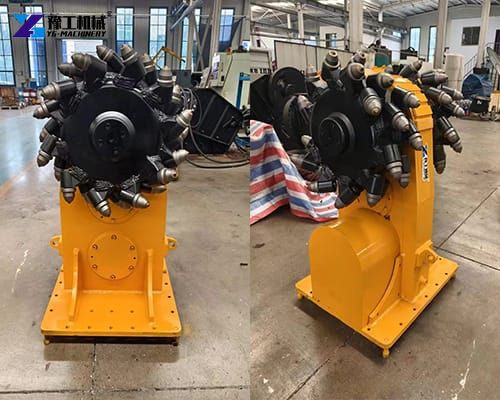
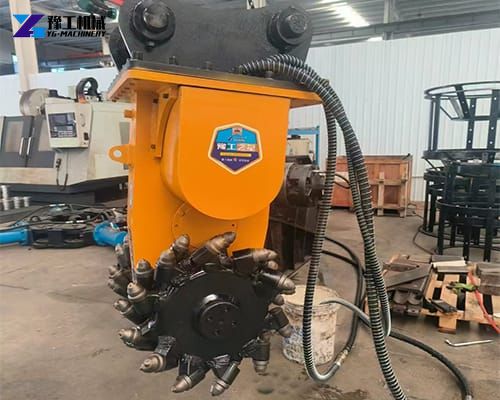
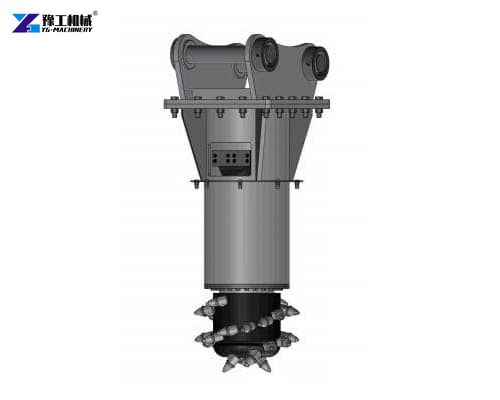
Hydraulic drum cutter is a specialized excavator attachment designed to grind away material using rotating drums equipped with heavy-duty picks. Unlike hammers that use percussive force to fracture material, the drum cutter utilizes high-torque hydraulic motors to rotate drums at controlled speeds. As the picks engage the surface, they “mill” or “shave” the material into small, manageable fragments.
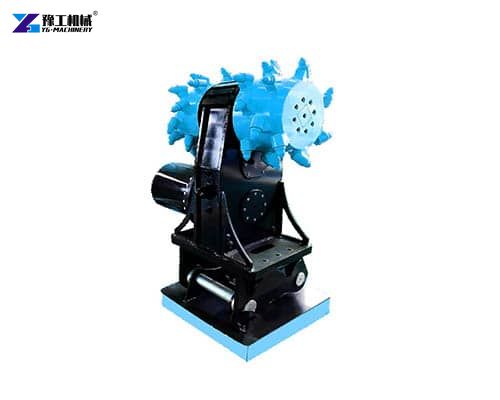
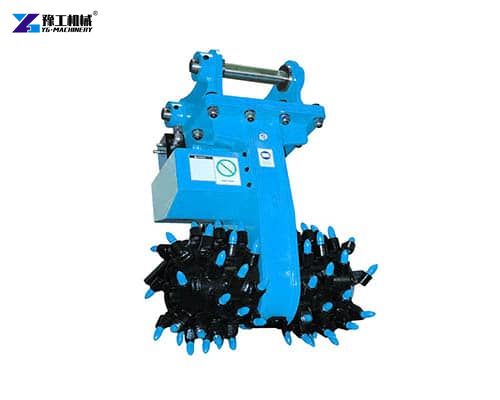
Hydraulic Drum Cutter Parameter
| Product Model | YGHX-X1 | YGHX-X2 | YGHX-Z1 | YGHX-Z2 | YGHX-D |
| Applicable Models | 6-9T | 10-18T | 20-27T | 30-40T | 45-60T |
| Machine Weight | 450kg | 550kg | 1100kg | 1250kg | 2450kg |
| Milling Width | 420mm | 650mm | 850mm | 950mm | 1150mm |
| Milling Head Diameter | 340mm | 450mm | 560mm | 660mm | 850mm |
| Number of Blade Heads | 40 | 56 | 64 | 64 | 60 |
| Recommended Speed | 95r/min | 85r/min | 78r/min | 75r/min | 55r/min |
| Recommended Flow Rate | 80L/min | 120L/min | 220L/min | 320L/min | 360L/min |
| Maximum Pressure | 35Mpa | 35Mpa | 35Mpa | 35Mpa | 35Mpa |
| Maximum Torque | 4700NM | 7000NM | 14300NM | 23300NM | 40300NM |
Categories of the Excavator Drum Cutter
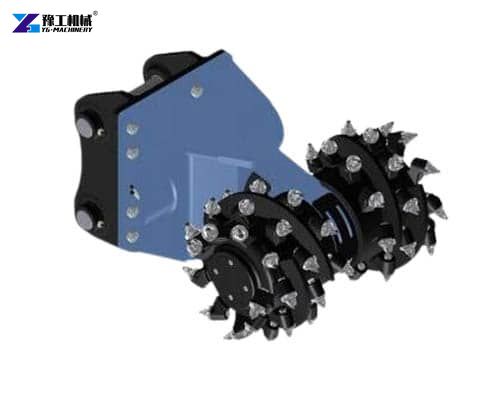
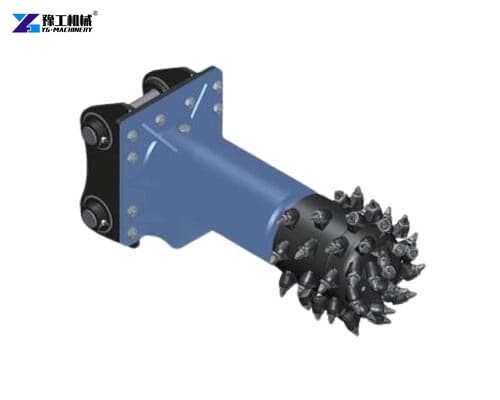
These tools are typically categorized into two main configurations:
- Longitudinal Drum Cutters (Axial): These feature a single drum that rotates parallel to the excavator arm. They are ideal for narrow trenching and hole cleaning.
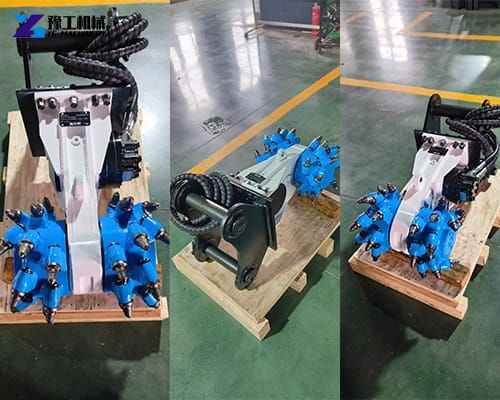
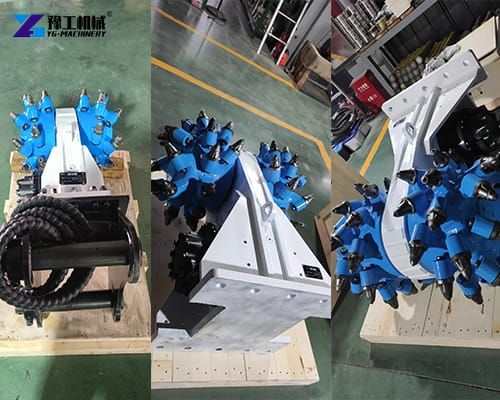
- Transverse Drum Cutters (Horizontal): These feature two drums mounted on a central gearbox, rotating perpendicular to the arm. This is the most common type used for bulk demolition and rock excavation.
Applications of the Hydraulic Drum Cutter
- Precision Trenching And Utility Work
Traditional blasting or hammering can over-break a trench, leading to high costs in backfilling and concrete usage. Excavator drum cutter allows operators to cut a trench to exact dimensions with smooth, vertical walls. This is particularly useful for laying pipelines or fiber optic cables in urban areas. - Concrete Demolition And Renovation
When removing sections of a bridge deck or profiling a diaphragm wall, precision is key. Drum cutters can remove specific layers of concrete without damaging the underlying rebar or the structural integrity of the surrounding areas. - Mining And Quarrying
In soft to medium-hard rock mining, drum cutters serve as a primary extraction tool. They produce a consistent grain size, which often eliminates the need for primary crushing, saving significant operational costs. - Underwater Excavation
Because these attachments can be easily sealed and pressurized, they are highly effective for underwater dredging, canal deepening, and bridge pier maintenance. They offer better visibility than hammers because they don’t stir up as much fine sediment.
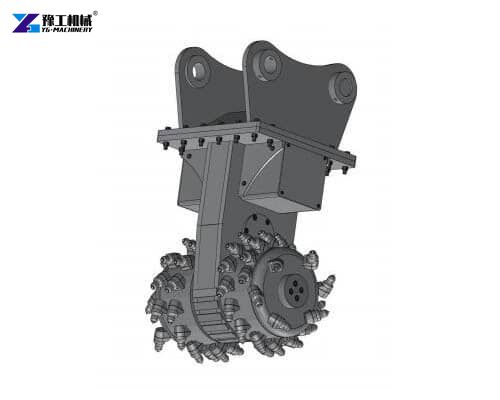
Technical Advantages
- Minimal Vibration And Noise
Hydraulic breakers create high-energy shockwaves that can damage nearby structures or disturb residents. Drum cutters operate with a continuous grinding motion, significantly reducing decibel levels and ground-borne vibration. This makes them the only viable choice for projects near hospitals, schools, or historical landmarks. - Precise Profiling
The milling action produces a flat surface. In tunneling or foundation work, this means less “over-break” and less waste. If you are preparing a surface for shotcrete, the drum cutter creates an ideal texture for bonding. - Material Reusability
The debris produced by a hydraulic drum cutter is usually uniform and small. This crushed material can often be reused immediately as backfill on the same site, reducing transport costs and environmental impact.
Maintenance Practices for Longevity
To ensure your hydraulic drum cutter maintains peak performance, a rigorous maintenance schedule is required.
- Daily Inspections:
Check for worn or missing picks. A missing pick can lead to the erosion of the drum itself, which is a much more expensive repair.
Inspect the hydraulic hoses for leaks or abrasions.
Grease the main bearings and seals as per the manufacturer’s intervals. - Weekly Maintenance:
Check the oil level in the gearbox.
Inspect the pick holders for deformation. If the holder is damaged, the pick will not rotate properly, leading to uneven wear (flat-spotting).