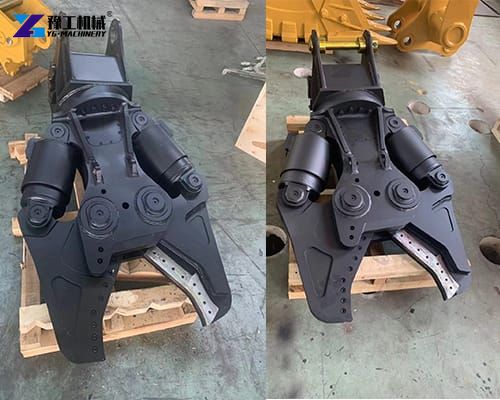
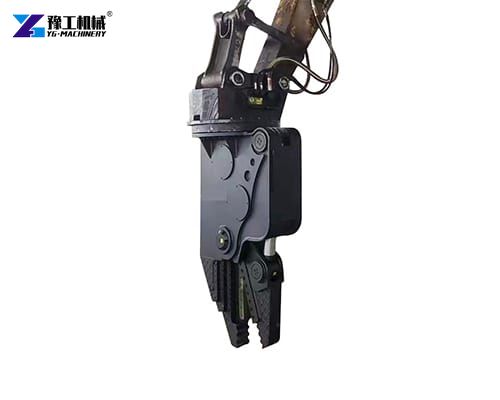
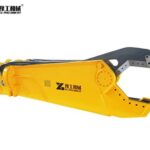
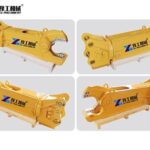
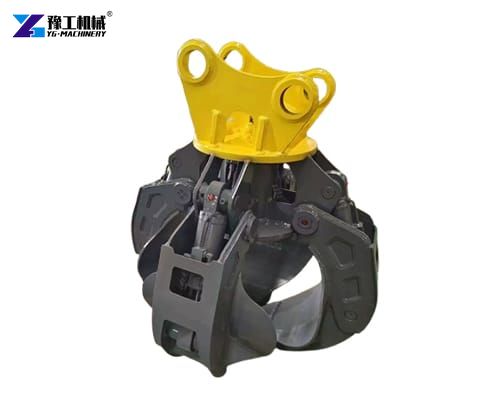
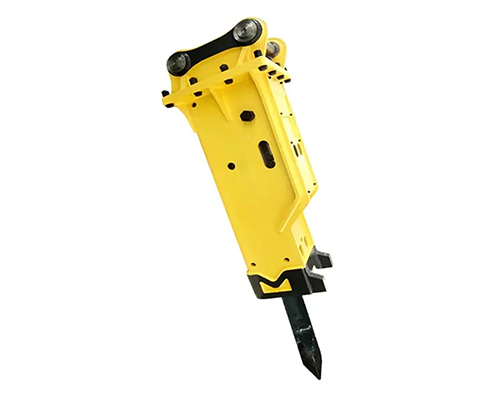
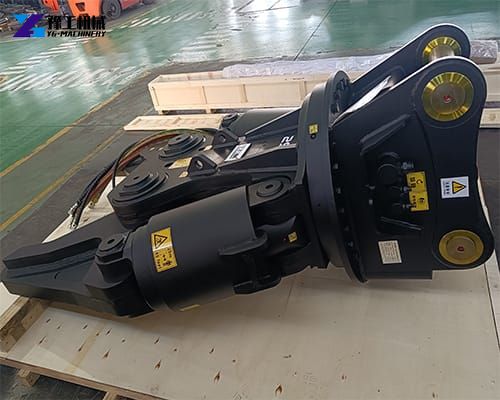
Hydraulic shear for an excavator is a heavy-duty attachment mounted on the excavator arm, designed primarily to cut metal structures, steel beams, pipelines, scrap materials, and reinforced concrete. Powered by the excavator’s hydraulic system, the shear converts hydraulic pressure into an immense cutting force. These tools are widely used on demolition sites, at scrap yards, in shipbreaking operations, during bridge dismantling, at industrial plant deconstruction, and at recycling facilities. Modern hydraulic shears combine intelligent engineering, high-strength materials, and optimized hydraulic flow to ensure precise and efficient cutting under demanding conditions.
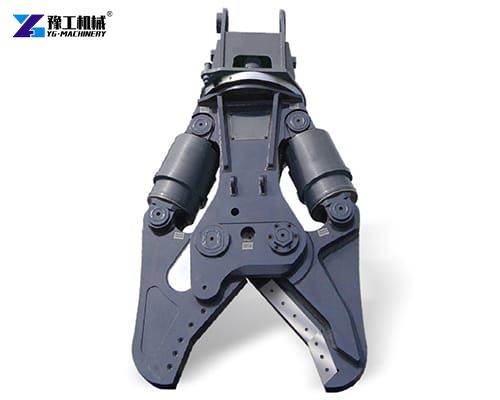
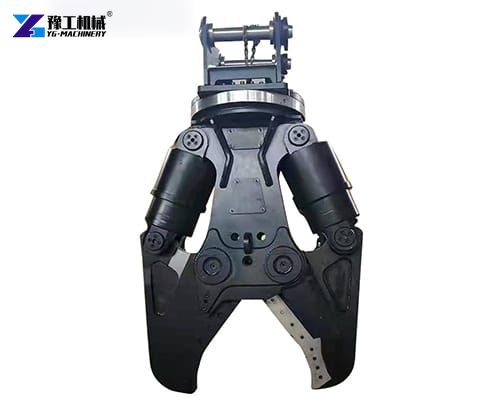
Application of Hydraulic Shear for Excavator
| Model | YGD280 | YGD380 | YGD480 |
| Suitable Excavator | 22-27T | 28-36T | 37-45T |
| Weight | 2650KG | 3850KG | 4540KG |
| Blade Length | 400+260mm | 350+360mm | 350+360mm |
| Working Pressure | 320bar | 330bar | 330bar |
| Length | 2380mm | 2700mm | 3655mm |
| Opening | 855mm | 780mm | 780mm |
| Cut Depth | 685mm | 650mm | 650mm |
| Shear Force | 1360KN | 2940KN | 2940KN |
Features of Hydraulic Shear Attachment for Excavator
- High Cutting Force
Hydraulic cylinders generate extreme pressure, enabling the shear to cut through thick steel plates, beams, and reinforced bars with ease. - Replaceable Blades
Hydraulic shear for excavator features interchangeable cutting blades made of high-alloy wear-resistant steel. This extends the tool’s lifespan and reduces operating costs. - 360-Degree Rotation
Many models include a hydraulic rotation mechanism that allows full rotation, improving positioning accuracy and operational flexibility. - Robust Frame Structure
The main body is built from high-strength steel plates, designed to withstand torsional stress and heavy impact during demolition tasks. - Optimized Jaw Design
The jaw geometry enhances penetration and reduces resistance, ensuring faster and cleaner cuts. - Wear-Resistant Components
Bushings, pins, and pivot areas are reinforced to minimize wear during extended use.

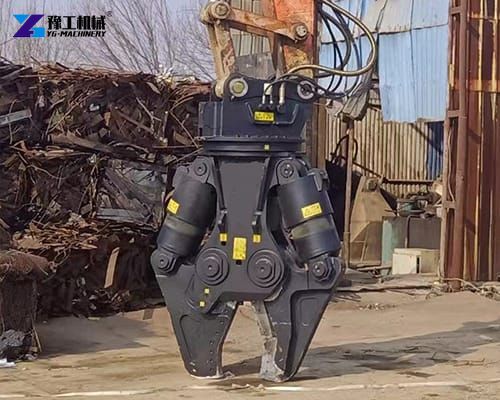
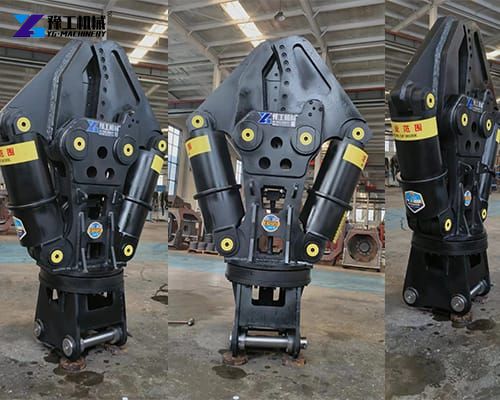
Structural Components of Hydraulic Shear for Excavator
- Main Frame
Constructed from hardened steel plates, the frame provides structural strength and houses the working components. - Hydraulic Cylinder
The cylinder generates cutting force. Its size and quality directly influence performance. - Cutting Blades
High-strength alloy steel blades are mounted on the jaw tips. They are often reversible and replaceable. - Jaw Assembly
The upper and lower jaws work together to grip and cut materials. - Rotation Motor
In rotating models, the motor enables 360-degree positioning. - Pins and Bushings
These components connect moving parts and must be wear-resistant for durability. - Hydraulic Hoses and Connectors
They channel hydraulic oil from the excavator to the shear.
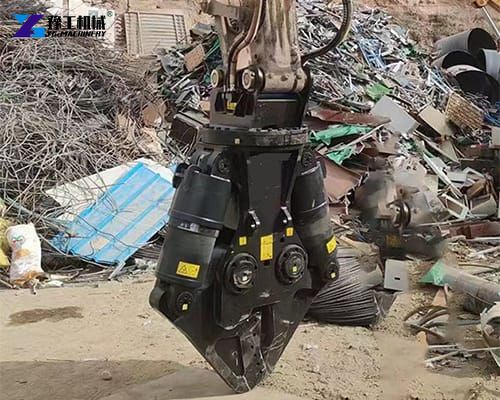
Primary Applications of Hydraulic Shear Attachment
- Building Demolition
They are ideal for cutting steel frameworks, rebar, beams, and structural supports during dismantling projects. - Scrap Metal Processing
In recycling facilities, hydraulic shears cut large metal pieces into manageable sizes for transportation and smelting. - Industrial Plant Decommissioning
Heavy industrial facilities often contain thick steel pipelines and machinery components that require powerful cutting tools. - Shipbreaking
Dismantling large vessels requires reliable equipment capable of cutting thick marine steel. - Bridge and Infrastructure Removal
Hydraulic shears efficiently remove structural steel during infrastructure renovation. - Emergency Rescue and Disaster Recovery
In certain cases, they assist in cutting collapsed steel structures during rescue operations.
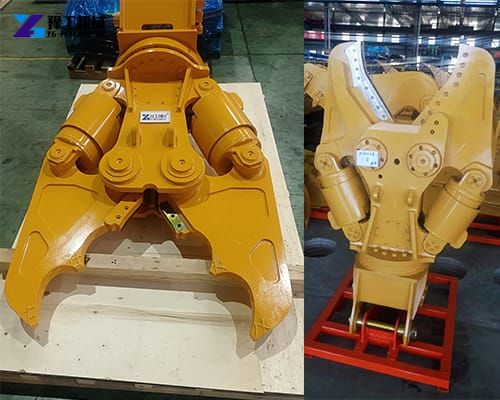
Selecting the Right Hydraulic Shear for Your Excavator
Choosing the correct hydraulic shear for the excavator requires careful evaluation.
- Excavator Compatibility
Ensure the shear matches the excavator’s weight class and hydraulic flow specifications. - Application Requirements
Determine whether the primary task is steel cutting, concrete demolition, or scrap processing. - Material Thickness
Evaluate the maximum thickness of materials you plan to cut. - Rotation Needs
If projects involve complex positioning, a rotating model is preferable. - Build Quality
Look for high-strength steel construction and reliable welding. - Blade Material
High-alloy, heat-treated blades offer better durability. - Maintenance Accessibility
Easy blade replacement and lubrication access reduce downtime.