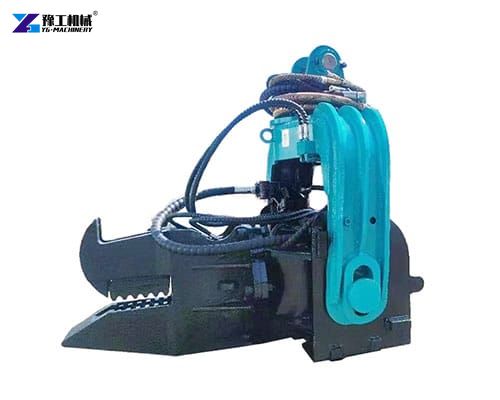
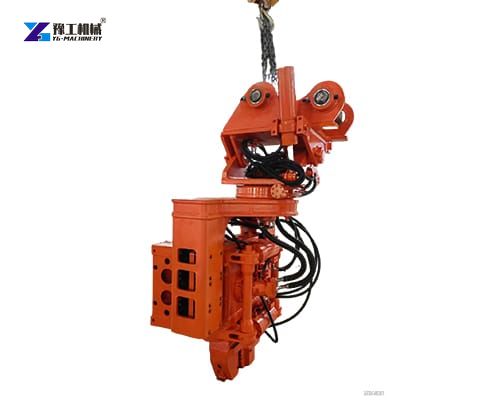
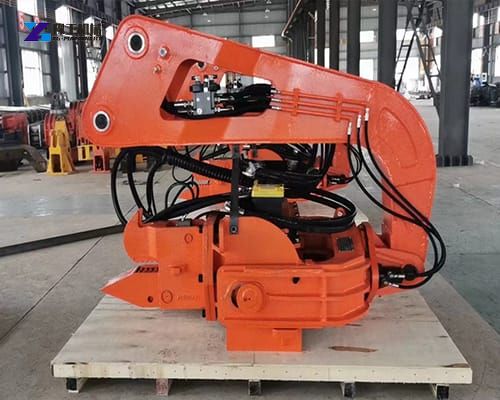
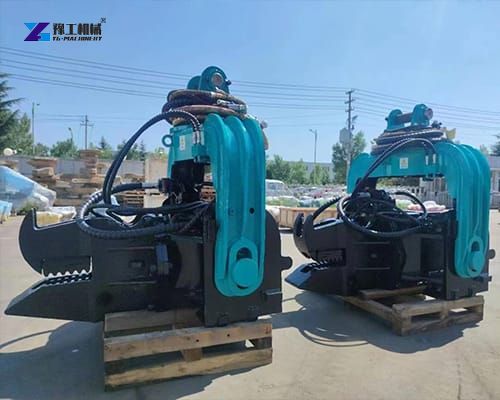
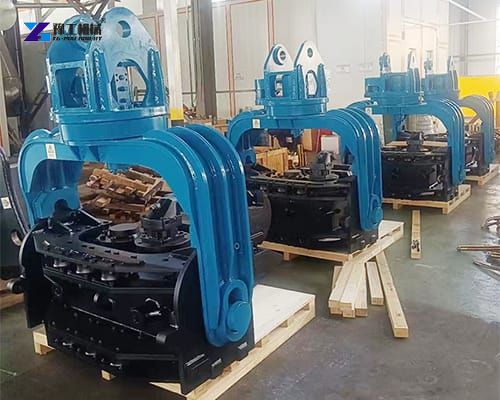
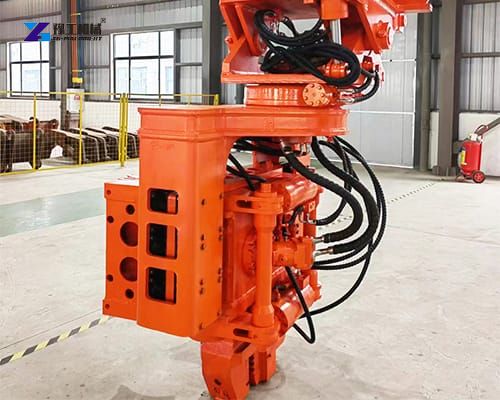
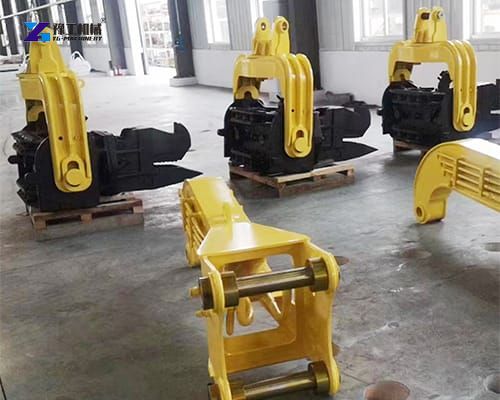
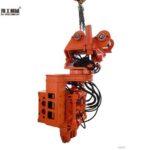
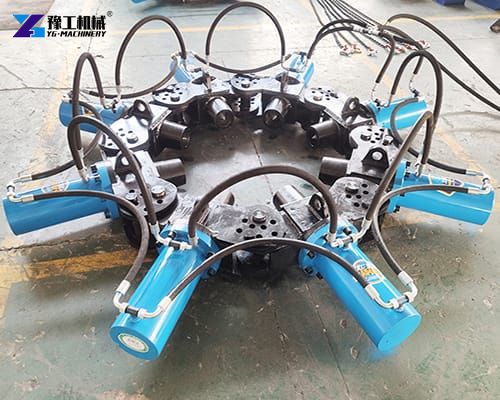
Vibrating pile driver is a hydraulically powered construction attachment that can be fitted onto standard excavators. Unlike impact pile drivers that rely on heavy striking force to drive piles underground, this equipment works based on high-frequency mechanical vibration. It transfers stable vertical vibration to pile bodies, changes the physical structure of surrounding soil layers, lowers soil friction against piles, and completes pile sinking or pulling work with combined force from vibration, equipment self-weight, and downward thrust from the host excavator. Most vibrating pile driver models are designed as excavator-mounted attachments. This design eliminates the need for independent transport vehicles or extra supporting cranes. Contractors can install and remove the equipment through quick couplers, allowing one excavator to switch between piling, excavation, and demolition tasks within a short time. This high level of flexibility greatly improves machine utilization on construction sites. There are compact units that suit medium-sized machines from 12 tons, while heavy-duty versions are built for excavators up to 40 tons for large-scale foundation projects. The equipment supports construction with pipe piles, sheet piles, and other common pile materials, with clear limits on the maximum outer diameter of pipe piles for stable and safe clamping performance.
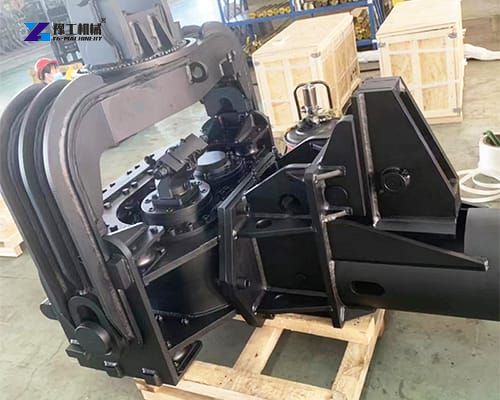
Understanding the internal layout helps operators and maintenance staff recognize potential faults early and extend service life. A standard vibrating pile driver consists of five core assembly sections.
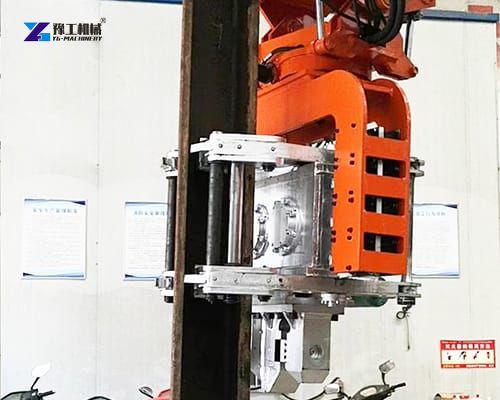
The first component is the hydraulic clamping mechanism. The clamp is the direct contact part that holds pile bodies firmly during operation. It uses hydraulic cylinders to provide stable clamping force and prevents sliding between the hammer and piles under continuous vibration. High strength alloy steel is used for clamping jaws to resist wear from frequent contact with steel piles. The opening range of the clamp determines which pile sizes the machine can handle.
The second core part is the vibration generating unit. Inside this housing sit a set of eccentric shafts driven by hydraulic motors. Two eccentric blocks rotate in opposite directions. Horizontal centrifugal forces cancel each other out automatically, and vertical forces stack together to create continuous vertical vibration. The quality of gears, bearings and eccentric blocks directly decides vibration stability and equipment durability under long hours of continuous operation.
Vibration isolation assemblies form the third key section. Heavy duty damping rubber blocks are placed between the vibration unit and upper connection frame. These components stop intense vibration from transferring upward to the excavator arm and hydraulic system. Without effective vibration isolation, vibration will damage excavator joints, hydraulic pipes and connection structures in a short period.
The upper connection bracket serves as the fourth component. It connects the whole pile driver to the excavator quick hitch. Manufacturers adjust bracket dimensions according to mainstream excavator brands, making installation simpler for customers.
The last major assembly is the hydraulic control system. It includes hydraulic motors, control valve groups, oil pipelines, and sealing components. The host excavator supplies flowing hydraulic oil to drive the vibration motor and clamping cylinder. Stable operating pressure ensures consistent vibration force during pile driving and exon environments.
The working process of a vibrating pile driver follows clear soil mechanics principles. After the excavator positions the equipment, the clamping jaw grips the pile tightly. Hydraulic oil from the excavator flows into the vibration motor and drives the internal eccentric shafts to rotate rapidly, generating continuous vertical vibration.
When vibration transfers to the pile body, vibration energy spreads into surrounding soil layers. The friction force between soil particles reduces significantly, and partial soil achieves temporary liquefaction. The side friction resistance between pile outer surface and soil drops sharply. Under the combined action of vertical vibration, the self weight of the vibrating pile driver and downward pressure from the excavator boom, the pile steadily sinks into target depth.
For pile extraction work, the working logic stays similar. The machine clamps the exposed section of the buried pile and activates vibration to reduce surrounding soil resistance. The excavator boom provides upward lifting force, and the pile is pulled out smoothly from underground. Operators can adjust vibration duration and lifting speed according to soil hardness to avoid pile deformation or sudden slipping.
Different soil types create different working results. Vibrating pile drivers show the best performance in sand, gravel and loose fill soil. In dense clay or hard rock layers, construction efficiency will decrease, and project planners need to adjust construction schemes or select higher power models with stronger vibration force to match difficult ground conditions.
Compared with traditional impact pile drivers and static pile pressing machines, vibrating pile drivers carry multiple practical advantages that attract construction companies of all sizes.
First of all, it delivers outstanding construction efficiency. Continuous vibration allows steady pile penetration. In suitable soil conditions, the sinking speed clearly outperforms impact type machinery. For projects requiring hundreds of piles, the saved working hours directly cut labor.
The second advantage lies in flexible mobility. As an excavator attachment, it moves together with the host machine. On construction sites with limited space such as narrow urban roads or shore areas, the whole unit can shift positions freely without separate transport vehicles.
The third merit is controlled environmental influence. Impact pile drivers create loud continuous striking noise and strong shock waves that may crack nearby structures. Vibrating pile drivers operate with less noise, and vibration spreads in a more predictable way.
The fourth advantage covers operational flexibility. Operators can adjust working parameters according to real time soil feedback. When meeting harder soil layers, they can adjust excavator thrust to improve penetration progress.
Last but not least, reasonable long-term operation cost. The overall structure has fewer easily damaged consumable parts than impact hammers that rely on frequent striking.
Common Application Scenarios For Vibrating Pile Driver
The versatility of vibrating pile drivers makes them suitable for a broad spectrum of infrastructure projects. Harbour and waterfront construction stands as a major application area. Contractors deploy these units to install seawall sheet piles, temporary cofferdams, and foundation supports for pier structures. Working on riverbank and coastal terrain requires equipment that handles saturated sandy soil, conditions where vibratory piling performs reliably.
Urban municipal engineering creates consistent demand. Underground subway stations, drainage pipeline projects, and basement excavation sites need temporary retaining walls built with steel sheet piles. The low vibration impact protects nearby residential buildings, underground cables and aged sewer pipelines. Road and bridge construction projects frequently use pipe piles and H-section bearing piles. Vibrating pile drivers install these foundation supports along highway routes and bridge abutments efficiently.
Renewable energy infrastructure represents a growing market segment. Solar panel arrays and onshore wind turbine bases require dozens or hundreds of foundation piles across wide open terrain. The mobility of excavator-mounted vibrating pile drivers allows crews to move continuously between pile locations without complicated setup steps. Temporary construction works also rely heavily on this equipment. Builders install temporary support piles for excavation safety barriers and later extract all steel materials.
How to Select the Right Vibrating Pile Driver for Your Project?
Choosing a matching vibrating pile driver requires systematic evaluation of multiple project parameters.
The first consideration is the tonnage class of your existing excavator. Every attachment has a compatible carrier weight range. Using an undersized unit on a heavy excavator wastes machine potential, while mounting an oversized model on a light carrier creates stability risks and may overload the hydraulic system.
Hydraulic specifications must align closely with the excavator output. Operators need to confirm required working flow and maximum operating pressure before finalising model selection. Mismatched hydraulic parameters lead to weak vibration performance or damage to the attachment hydraulic motors.
Next, analyse the types and sizes of piles you plan to handle. Outer diameter limits define the maximum size of pipe piles the clamp can secure. If projects regularly involve larger diameter tubular piles, we need to select models with upgraded clamping assemblies.
Soil conditions should guide performance requirements. Dense compacted sand or gravel ground needs equipment with stronger vibration force to maintain steady penetration speed. Projects focused mainly on soft alluvial soil can operate effectively with standard vibration specifications.
We should also review overall machine dimensions. If regular work occurs in low-clearance building sites, compact dimensions become necessary.