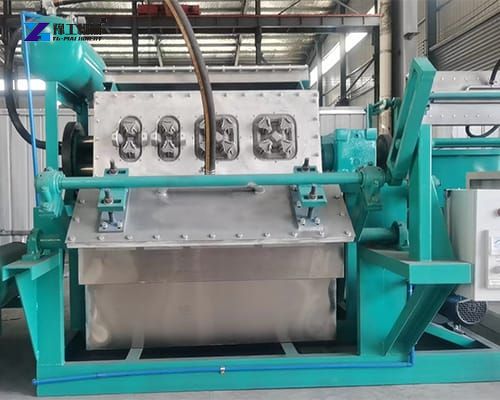
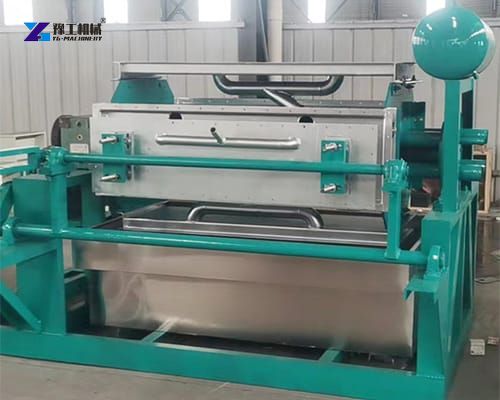
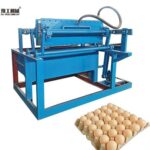
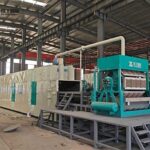
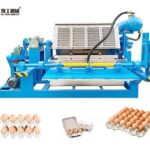
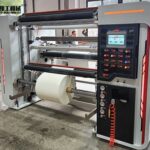
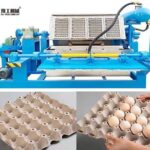
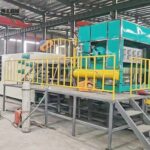
This is the story of how an Australian packaging company successfully purchased a coffee cup tray making machine from our factory. The customer is located in Australia. The company had been supplying disposable food packaging products for over ten years, including paper cups, paper bowls, paper bags, and so on. As local coffee shops started requesting eco-friendly packaging, the customer noticed a significant increase in demand for molded paper coffee cup trays. They found our company’s website while searching for a coffee cup tray making machine. We discussed a lot of details about this machine to learn their requirements, as the coffee trays mount they plan to produce every day, two-cup or four-cup trays, and so on. Then we recommend the suitable model according to their requirements. Finally, they place the order.
Parameters of the Coffee Cup Tray Making Machine Exported to Australia
| Model | YG-3000-4X4 |
| Capacity | 3000pcs/h |
| Power | 60kw/hour |
| Voltage | 380V50HZ |
| Weight | 4800kg |
| Dimensions (main machine) | 3250*1800*1800mm |
| Paper consumption | 240kg/hour |
| Water consumption | 480kg/hour |
| Drying | multi-layer drying |
Why Coffee Cup Tray Making Machine Matter in Today’s Market?
- For coffee shops and chains: Consistent, sturdy trays keep beverages stable during takeout, reducing spills and improving the customer experience.
- Consistency: Each tray comes out with uniform dimensions, fold lines, and strength, reducing breakage and customer complaints.
- Versatility: Some machines can switch between different tray sizes, enabling manufacturers to serve multiple customers without buying new equipment.
- Cost savings: While the upfront investment is notable, the long-term labor, material, and waste savings can be substantial.
Choosing the Right Machine for Your Business
- Volume goals: Estimate current demand plus growth to pick an appropriate throughput.
- Substrate and coatings: Confirm compatibility with your fiber grade, moisture barrier, and any coatings.
- Space and footprint: Consider the plant layout, ceiling height, and potential future expansion.