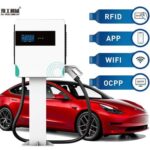
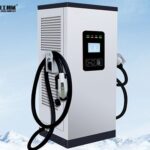
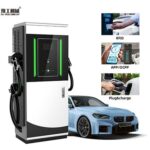
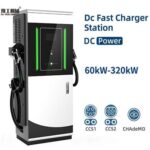
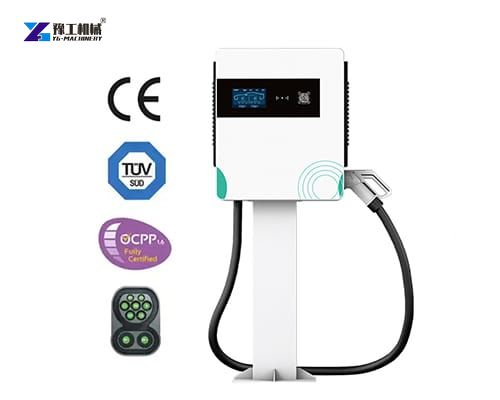
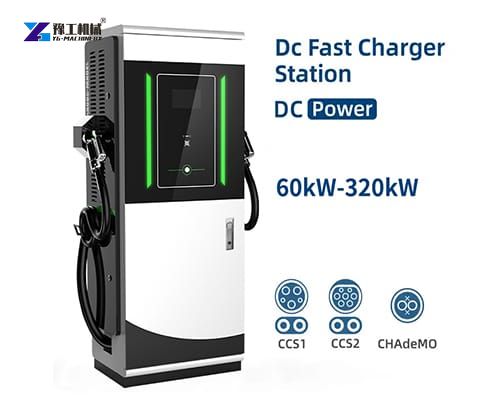
Electric car charging pile is a specially designed to safely transfer electricity from the power grid to electric vehicles. Similar to a traditional fuel station, it replenishes vehicle energy, but instead of gasoline or diesel, it delivers electrical energy through standardized charging connectors. Modern charging piles are available in AC and DC versions. AC chargers are generally used for home and workplace charging, where charging speed is less critical, while DC fast chargers are designed for commercial environments that require rapid charging and high vehicle turnover. Today’s intelligent car charging pile integrates advanced electronics, communication technology, safety protection, and cloud-based management systems, allowing operators to remotely monitor equipment performance, perform diagnostics, analyze usage statistics, and optimize operational efficiency.
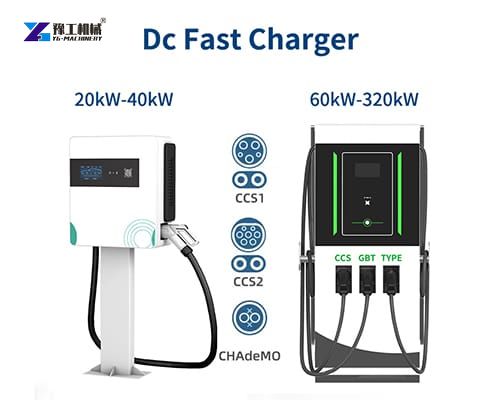
Specifications of Electric Car Charging Pile
| Model | YG-60 | YG-80 | YG-120 | YG-160 |
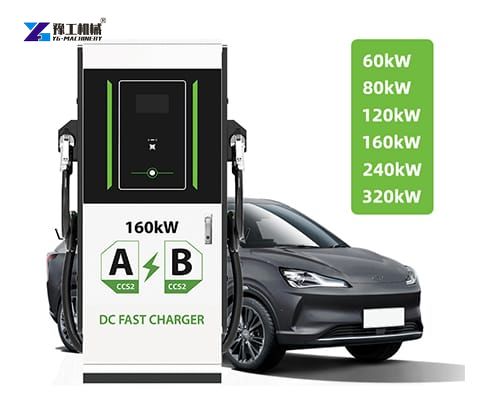
| Rated Power | 60kw | 80kw | 120kw | 160kw |
| Maximum Output Current | 160A | 180A | 240A | 240A |
| Constant Power Output Voltage Range | DC300~1000V | |||
| Host Computer Communication | Ethernet/4G (optional) | |||
| Input Voltage | AC380V±15% | |||
| Input Frequency | 50Hz±10% | |||
| Output Voltage Range | DC200-1000V | |||
| Protection Class | IP54 | |||
| Installation Method | Floor-standing installation (ground fixed) | |||
Features of Electric Car Charging Pile
- A high-performance car charging pile combines safety, efficiency, intelligence, and durability.
- Fast charging capability significantly reduces waiting time for drivers, making electric vehicles more practical for both private and commercial applications.
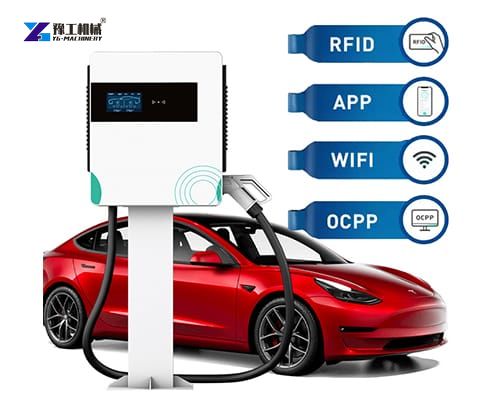
- Smart communication enables remote monitoring through network connections, allowing operators to manage charging stations without being physically present.
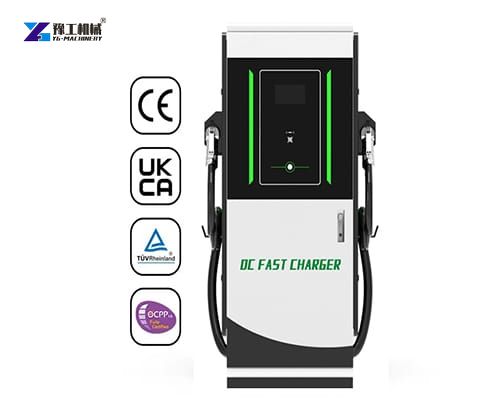
- Multiple safety protection systems continuously monitor voltage, current, temperature, insulation, grounding, and internal operating conditions.
- Automatic fault diagnosis improves maintenance efficiency by identifying abnormal conditions before they become serious failures.
- User-friendly interfaces provide intuitive operation through touch screens, indicator lights, mobile applications, and QR code payment systems.
- Flexible installation options support various deployment scenarios ranging from individual residential parking spaces to large-scale charging stations.
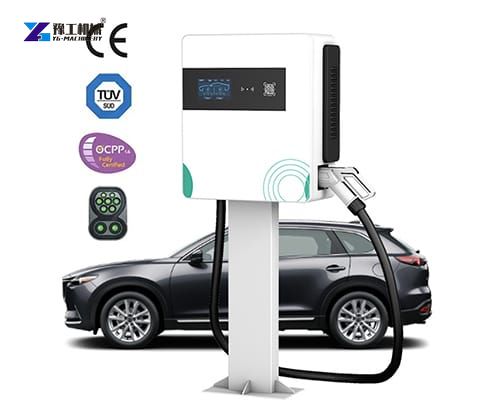
Applications of the Car Charging Pile
- Residential communities increasingly install charging piles to support homeowners who charge vehicles overnight.
- Commercial office buildings provide employee charging facilities that improve workplace convenience and sustainability.
- Shopping malls attract customers by offering convenient charging services while visitors shop or dine.
- Hotels enhance guest experiences by providing electric vehicle charging amenities.
- Highway service areas depend on fast charging stations to support long-distance travel.
- Public parking garages generate additional revenue through charging services.
- Taxi companies rely on rapid charging infrastructure to maximize fleet utilization.
- Bus depots require high-power charging systems capable of supporting commercial electric buses.
- Logistics companies use charging piles to maintain electric delivery fleets operating throughout the day.
- Industrial parks install centralized charging infrastructure for employee vehicles and electric transportation equipment.
- Government agencies continue expanding public charging networks to encourage electric vehicle adoption.
- Educational institutions provide charging facilities for students, faculty, and visitors.
- Healthcare facilities increasingly include charging infrastructure for staff, patients, and emergency service vehicles.
Advantages of Using a Car Charging Pile
- Improved charging efficiency reduces vehicle downtime while increasing charging station utilization.
- Lower operating costs compared with traditional fuel stations contribute to long-term economic benefits.
- Intelligent energy management enables optimized electricity consumption during peak and off-peak periods.
- Environmental protection supports the reduction of greenhouse gas emissions and urban air pollution.
- Scalability allows charging infrastructure to expand alongside growing electric vehicle populations.
- Remote management minimizes operational labor while improving maintenance efficiency.
- High reliability ensures continuous operation under demanding commercial conditions.
- Digital payment integration simplifies user experience while improving operational transparency.
- Real-time monitoring enhances equipment safety by continuously tracking operational parameters.
- Data analytics provide valuable insights into charging behavior, equipment utilization, and maintenance scheduling.
Structural Components of a Car Charging Pile
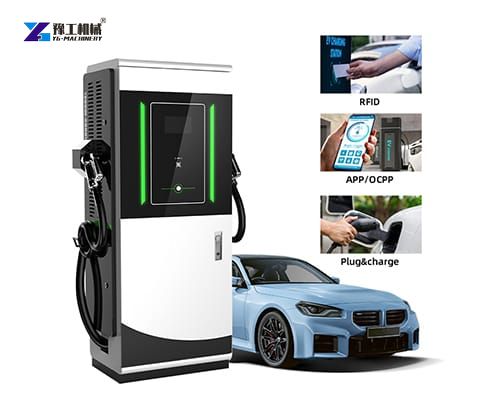
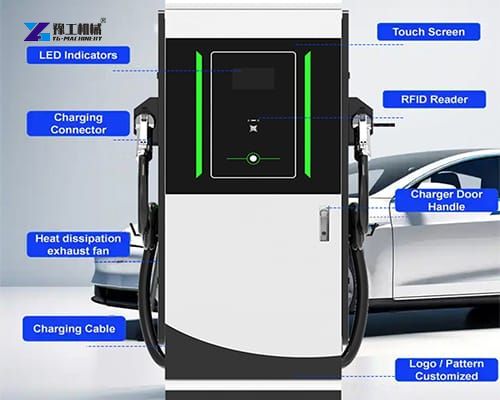
The cabinet serves as the protective enclosure, shielding internal electronics from environmental conditions and mechanical damage.
The power conversion module converts incoming electrical energy into suitable charging power for electric vehicles.
The control unit functions as the system’s brain, coordinating charging logic, communication, protection, and user interaction.
The display interface provides operational information, charging status, instructions, and payment details.
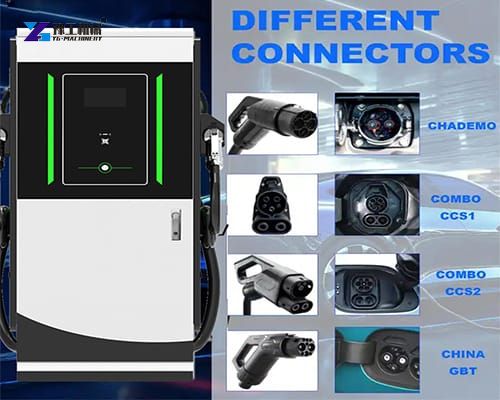
Charging connectors establish secure electrical connections between the charger and the vehicle.
The cooling system dissipates heat generated during high-power charging, ensuring stable performance.
Protection circuits monitor electrical conditions and immediately respond to abnormal events.
Communication modules connect the charging pile to management platforms through wired or wireless networks.
Metering systems accurately measure electricity consumption for billing and energy management.
Emergency stop devices allow users to immediately interrupt charging when necessary.
Working Principle of a Car Charging Pile
The charging process begins when a vehicle connects to the charging pile.
The charging system first verifies communication compatibility between the vehicle and charger.
Safety inspections confirm proper grounding, insulation, connector status, and electrical integrity before power delivery begins.
The charger exchanges information with the vehicle’s battery management system to determine appropriate charging parameters.
The charging controller continuously adjusts voltage and current according to battery conditions, charging stage, and temperature.
As the battery approaches full capacity, charging current gradually decreases to protect battery health and maximize service life.
Throughout the charging process, multiple sensors continuously monitor operating conditions.
If abnormal voltage, excessive current, overheating, communication failure, or insulation problems occur, the charging system automatically interrupts power delivery to ensure user safety.
After charging completes, the system records charging information, updates management databases, and safely disconnects power.