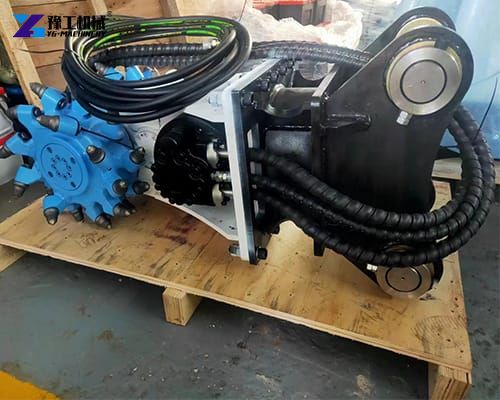
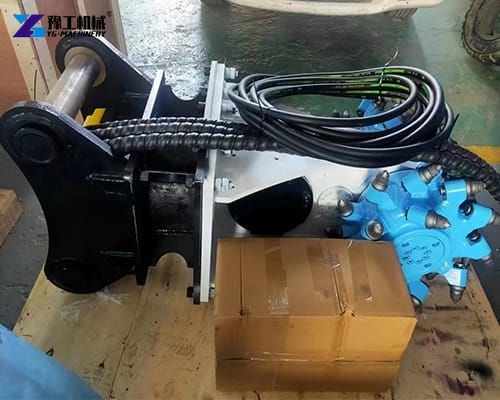
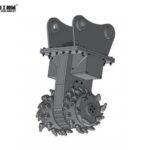
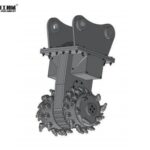
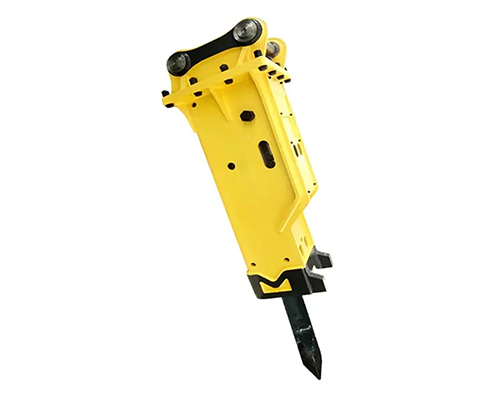
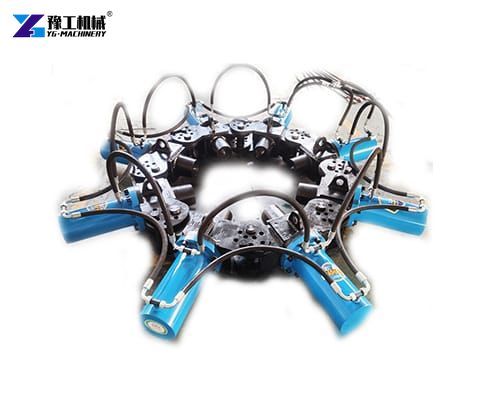
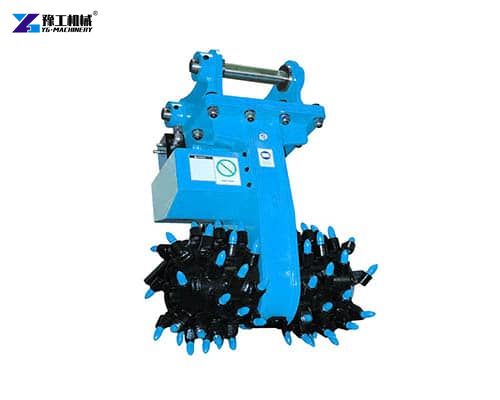
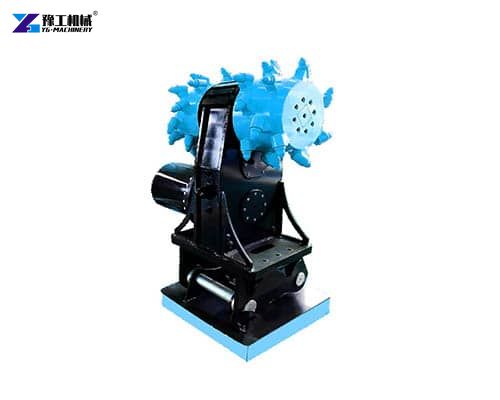
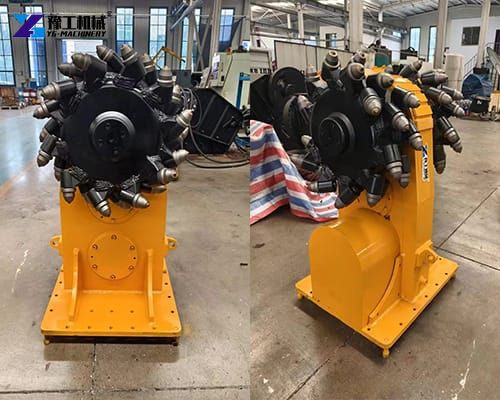
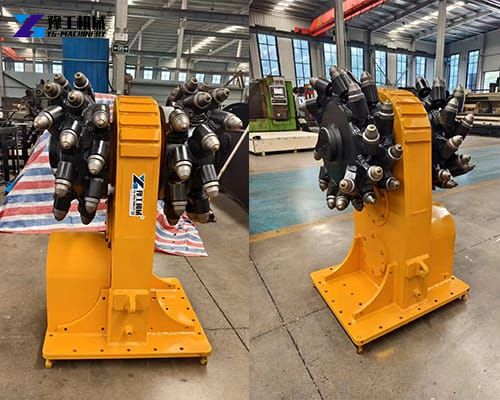
Excavator milling head is a hydraulic-driven attachment mounted on an excavator arm. It consists of rotating drums equipped with cutting picks that grind, mill, or profile materials. Different from impact-based tools such as hydraulic breakers, the excavator drum cutter operates using continuous rotary motion, enabling precise and low-vibration material removal. It is commonly used in construction, mining, road maintenance, and underground engineering projects. It is particularly effective in situations requiring minimal noise and vibration, making it ideal for urban environments or projects near sensitive structures.
Parameter of the Hydraulic Drum Cutter
| Product Model | HX-X1 | HX-X2 | HX-Z1 | HX-Z2 | HX-D |
| Applicable Models | 6-9T | 10-18T | 20-27T | 30-40T | 45-60T |
| Machine Weight | 450kg | 550kg | 1100kg | 1250kg | 2450kg |
| Milling Width | 420mm | 650mm | 850mm | 950mm | 1150mm |
| Milling Head Diameter | 340mm | 450mm | 560mm | 660mm | 850mm |
| Number of Blade Heads | 40 | 56 | 64 | 64 | 60 |
| Recommended Speed | 95r/min | 85r/min | 78r/min | 75r/min | 55r/min |
| Recommended Flow Rate | 80L/min | 120L/min | 220L/min | 320L/min | 360L/min |
| Maximum Pressure | 35Mpa | 35Mpa | 35Mpa | 35Mpa | 35Mpa |
| Maximum Torque | 4700NM | 7000NM | 14300NM | 23300NM | 40300NM |
Features of Milling Head for Excavator
- High Torque Hydraulic Motor
The core of the excavator milling head is a powerful hydraulic motor that delivers consistent torque. This ensures stable cutting performance even when working on hard materials. - Durable Cutting Drums
The rotating drums are equipped with wear-resistant picks made from high-strength alloy steel and carbide tips. These components ensure longevity and efficient cutting. - Precision Depth Control
Operators can accurately control milling depth through the excavator’s hydraulic system. This allows for detailed profiling and trenching tasks. - Low Vibration Operation
Different from impact tools, the drum cutter attachment for excavator generates minimal vibration. This reduces structural stress and increases safety when working near buildings. - Compact Design
The compact structure enables operation in narrow or restricted spaces, including tunnels and trenches. - Replaceable Wear Parts
Most excavator drum cutter attachment designs include easily replaceable cutting tools and wear plates, reducing downtime during maintenance.
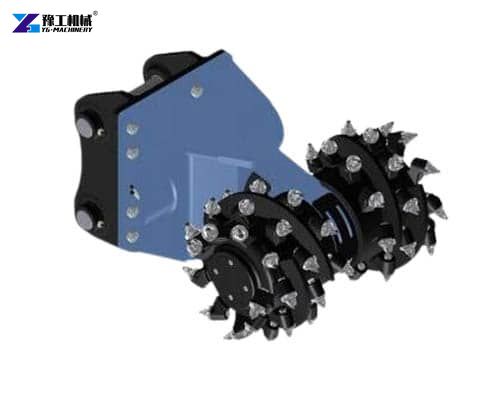
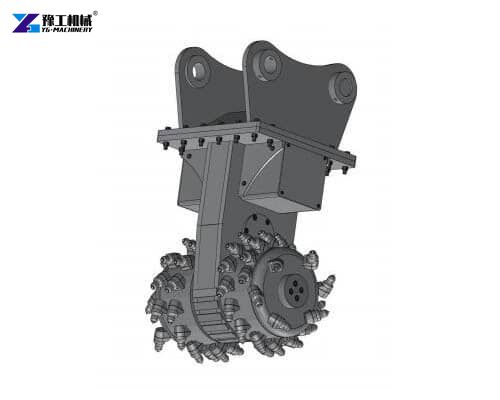
Structure Composition of Excavator Milling Head
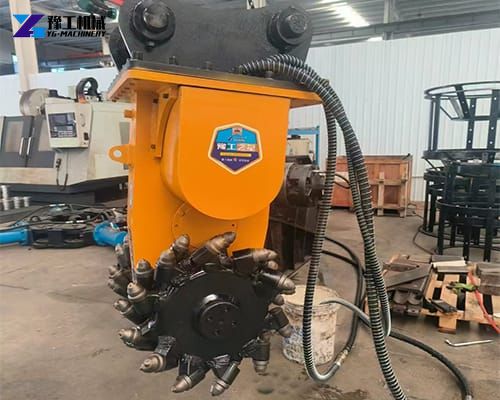
- Hydraulic Motor
Provides rotational power to the cutting drums. - Gearbox System
Transfers and optimizes torque from the motor to the drum shafts. - Cutting Drums
Cylindrical drums fitted with cutting picks. Some designs feature single drum systems while others use dual drums. - Cutting Picks
Carbide-tipped tools mounted on the drum surface. They directly engage with material and perform the milling action. - Housing Frame
A robust steel frame that protects internal components and withstands operational stress. - Mounting Bracket
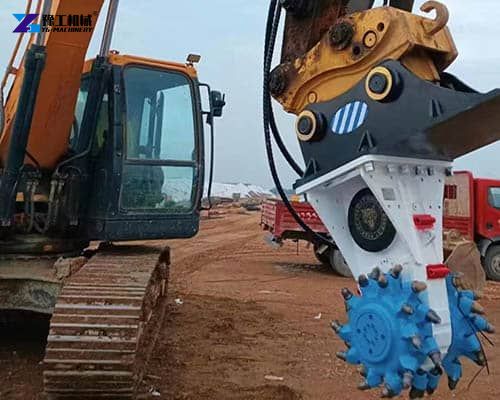
Connects the excavator milling head to the excavator arm. It may include quick coupler compatibility. - Hydraulic Connections
High-pressure hoses and fittings that connect the attachment to the excavator’s hydraulic system.
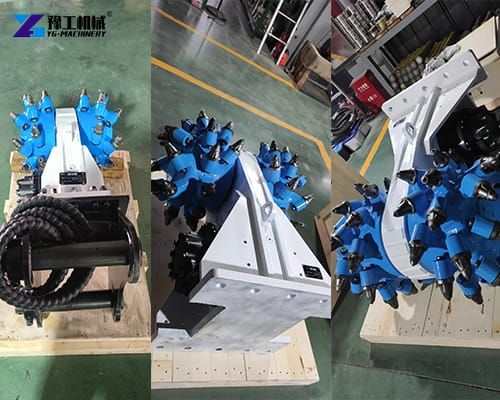
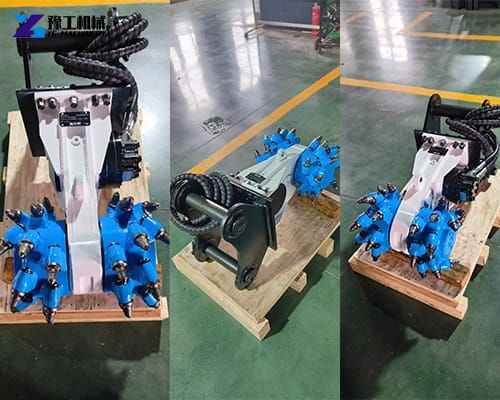
Working Principle of Rotary Drum Cutter
The excavator milling head operates through hydraulic power supplied by the excavator. When activated, hydraulic fluid drives the motor, which rotates the cutting drums at controlled speeds. As the drums rotate, the carbide picks scrape and grind the surface material.
Unlike impact-based tools, the milling head for excavator removes material gradually. This continuous cutting action provides smoother surfaces and greater precision. The operator can adjust speed, depth, and angle depending on project requirements.
The rotary motion ensures consistent material fragmentation, which can then be collected or left for removal. The ability to control direction and pressure makes it highly adaptable for detailed shaping and profiling.
Main Applications of Excavator Drum Cutter
- Road Surface Milling
An excavator milling head is frequently used for removing damaged asphalt layers before resurfacing. It ensures even removal without damaging underlying structures. - Trenching Operations
The attachment creates narrow and precise trenches for pipelines, cables, and drainage systems. - Tunnel Excavation
In underground construction, it offers controlled rock removal with minimal vibration, reducing risk to surrounding structures. - Demolition Projects
It can selectively remove concrete sections without affecting adjacent areas. - Rock and Soil Stabilization
Used to mix and stabilize soil or crush soft rock formations. - Scaling and Profiling
In mining and slope stabilization, it removes loose rock and shapes surfaces safely. - Urban Construction
Low noise and vibration levels make it ideal for city-based projects.
Advantages of Using an Milling Head for Excavator
- Precision Cutting
The excavator milling head enables accurate depth and surface control, ideal for specialized construction tasks. - Versatility
Suitable for asphalt, concrete, rock, frozen soil, and other materials. - Increased Efficiency
Continuous rotary action allows steady material removal without repeated repositioning. - Lower Environmental Impact
Minimal dust and controlled material removal reduce environmental disturbance.
Factors to Consider When Choosing an Excavator Milling Head
- Excavator Compatibility
Ensure hydraulic flow and pressure match the attachment requirements. - Material Type
Consider the hardness and density of materials to be milled. - Project Scale
Select drum width and power capacity based on workload. - Quality of Cutting Picks
High-grade carbide picks extend operational lifespan. - Cooling System
Efficient heat management improves durability. - Brand Reputation And Support
Reliable after-sales service and spare parts availability are essential.