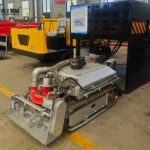
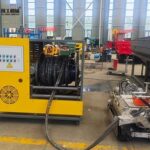
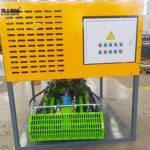
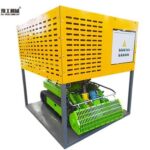
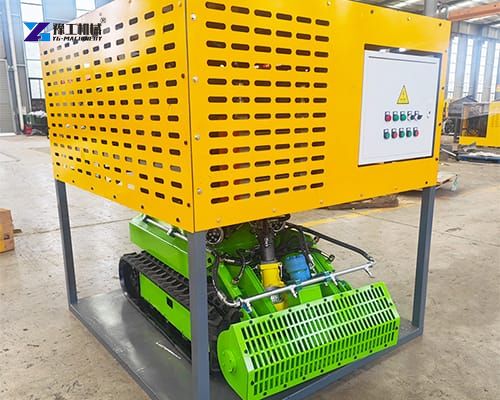
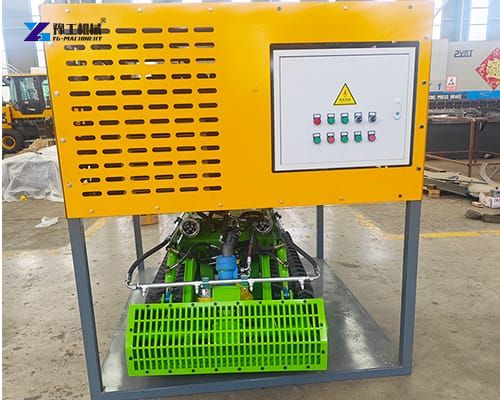
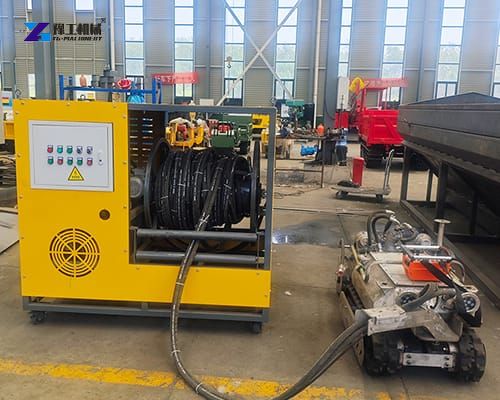
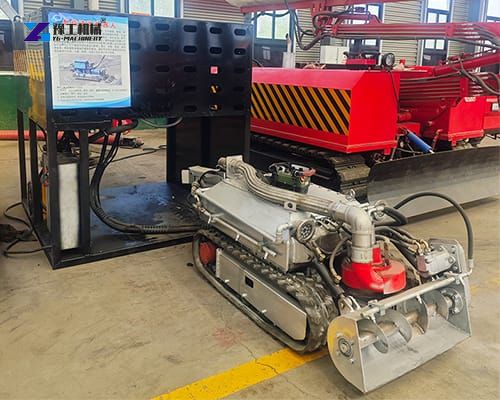
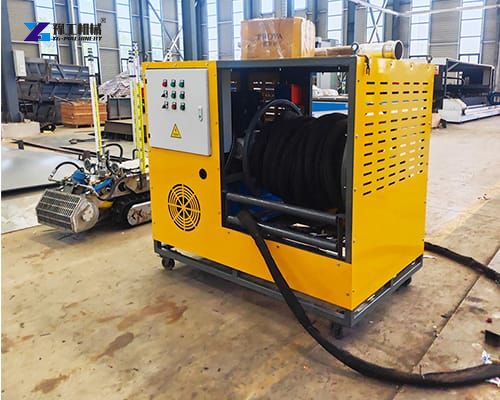
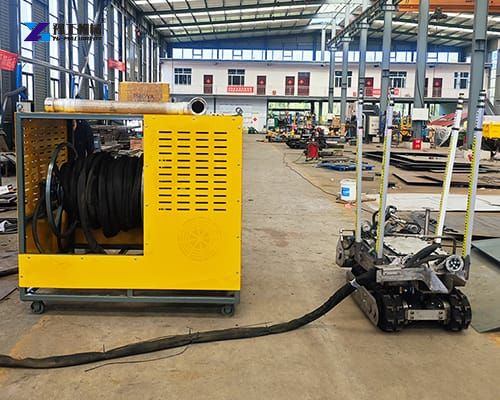
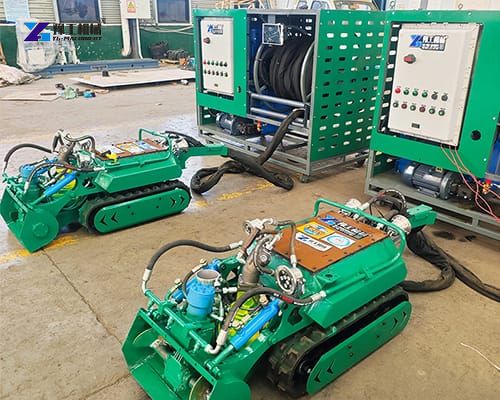
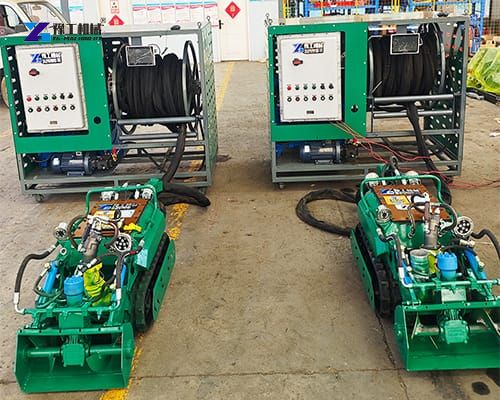
Drain cleaning robot is a remote-operated cleaning machine designed to work inside drains, sewers, culverts, industrial pipelines, and other confined drainage systems where manual cleaning is difficult, slow, or unsafe. Instead of sending workers directly into a narrow or contaminated pipeline, the robot uses a tracked chassis, hydraulic power, a cleaning or dredging system, and a remote control unit to remove accumulated sludge, sand, sediment, debris, and other blockages. This type of machine provides a practical way to improve cleaning efficiency while reducing direct exposure to hazardous working environments.
Specifications of Drain Cleaning Robot
| Model | YG-500 | YG-600 | YG-700 | YG-800 | YG-900 | YG-1200 |
| Robot dimensions | 1500*500*650mm | 1500*600*650mm | 1600*700*650mm | 1600*850*700mm | 1650*960*750mm | 1900*1200*750mm |
| Dredging width | 500mm | 600mm | 700mm | 800mm | 900mm | 1200mm |
| Track travel speed | 3-15m/s | 3-15m/s | 3-15m/s | 3-15m/s | 3-15m/s | 3-15m/s |
| Robot weight | 320kg | 350kg | 380kg | 400kg | 420kg | 500kg |
| Pump output diameter | 3inch | 3inch | 4inch | 4inch | 4inch | 4inch |
| Pump flow rate(cubic meters/ hour) | 100 m³ | 100m³ | 200m³ | 200m³ | 200m³ | 200m³ |
| Hydraulic station dimensions | 2200*1200*1700mm | 2200*1200*1700mm | 2200*1200*1700mm | 2200*1200*1700mm | 2200*1200*1700mm | 2120*1240*1200mm |
| Main motor power | 22kw | 22kw | 30kw | 30kw | 30kw | 45kw |
| Hydraulic system pressure | 0-16Mpa | |||||
| Particle size | 15mm | 15mm | 38mm | 38mm | 38mm | 60mm |
| Reeling system speed | 0-10r/min | |||||
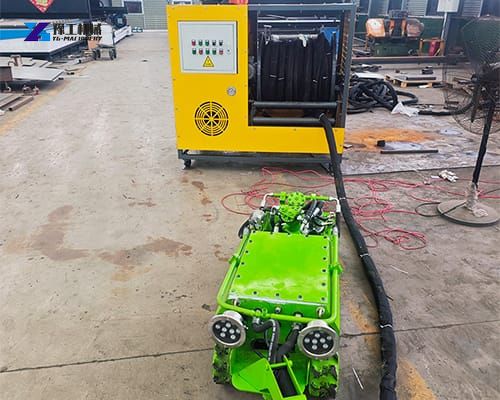
| Hydraulic hoses | 50m (Standard configuration) | |||||
| Control system | Wireless remote control | |||||
| Lighting system | Underwater LED lights *2 | |||||
How Does a Drain Cleaning Robot Work?
First, the operator positions the robot at the entrance of the drain or pipeline. After the machine is checked and connected to its hydraulic power system, it can enter the working area under remote control.
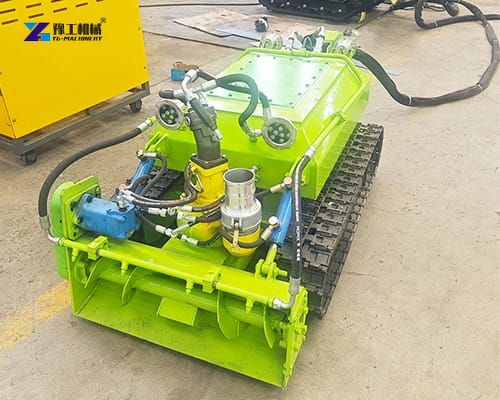
The tracked chassis moves the robot forward or backward. At the same time, the cleaning mechanism works against accumulated material on the pipeline floor or around the blockage.
Depending on the type of material, the cleaning process may involve scraping, cutting, loosening, dredging, or breaking up deposits. Once the material has been loosened, it can be removed through the drainage system or collected using compatible pumping and sludge-handling equipment.
The operator controls the machine from outside the confined space. This makes it possible to adjust movement, cleaning speed, and working direction without requiring a worker to physically enter the drain.
Some systems also use lighting and cameras to improve visibility. This is particularly useful when the pipeline is dark, partially flooded, or difficult to inspect visually.
Where Can a Tank Cleaning Robot Be Used?
Municipal Sewer Systems
Municipal sewer networks are one of the most obvious applications. Long-term accumulation of sediment, soil, stones, grease, and other debris can reduce a sewer’s effective flow area.
A drain cleaning robot can help maintenance crews deal with deposits without sending personnel directly into the pipeline.
It is especially useful for sections that are:
- Deep underground
- Difficult to access
- Contaminated
- Wet or flooded
- Too narrow for conventional machinery
- Located in areas with complicated traffic or site conditions
Stormwater Drainage
Storm drains can accumulate sand, leaves, stones, mud, and other materials after heavy rainfall. If the deposits are not removed, the available drainage capacity can gradually decrease.
A robot for storm drain cleaning can enter difficult sections and loosen compacted material before it is removed by pumps or other equipment.
This makes robotic cleaning particularly useful for scheduled drainage maintenance as well as post-storm cleanup.
Industrial Drainage Systems
Factories, processing plants, warehouses, power facilities, and other industrial sites often have drainage systems that are exposed to sediment, process residue, sludge, or other waste materials.
In these environments, cleaning access can be restricted by machinery, structures, hazardous substances, or confined-space requirements.
A remote sewer cleaning robot allows operators to move the cleaning tool into the affected area while remaining outside the pipeline.
Culverts and Large Underground Channels
Culverts and underground drainage channels can collect significant amounts of sediment over time. Large deposits may be difficult to remove efficiently with simple hand tools.
Tracked robotic equipment can provide a mechanical solution for moving into these areas and breaking up accumulated material.
Wastewater and Utility Facilities
Wastewater facilities and utility infrastructure may also require periodic removal of deposits from underground channels and pipelines.
The exact suitability depends on the pipeline diameter, material being removed, water level, access conditions, and required cleaning method. Equipment should always be matched to the actual site before purchase.
Why Remote Operation Matters?
One of the main reasons companies invest in a drain cleaning robot is to reduce the need for direct human entry into confined spaces.
Confined-space work can involve several hazards, including poor ventilation, contaminated water, unstable deposits, limited visibility, and difficult emergency access. Removing the need for workers to physically enter certain cleaning areas can simplify the work process.
Remote operation also changes where the operator can stand during cleaning. Instead of working directly beside or inside the drain, the operator can control the machine from a suitable position.
This does not eliminate every job-site risk. Operators still need to follow site-specific safety procedures, equipment instructions, confined-space regulations, and electrical or hydraulic safety requirements.
However, from an operational perspective, remote cleaning can help separate the worker from the immediate cleaning environment.
Core Performance of a Drain Cleaning Robot
For equipment buyers, performance should be considered as a complete system rather than a single specification.
1. Tracked Mobility
A tracked chassis is important because underground drainage environments rarely provide clean and dry surfaces.
Mud, water, loose sediment, uneven floors, and debris can make ordinary wheeled movement difficult. Tracks distribute the machine’s weight over a larger contact area and provide a stable platform for movement.
2. Hydraulic Working Power
Hydraulic systems are widely used in heavy-duty cleaning machinery because they can deliver controlled mechanical power for demanding applications.
A hydraulic drive can support the robot’s travel system and cleaning mechanism while allowing the operator to adjust movement according to the working condition.
3. Remote Control
A reliable remote control system is essential for robotic drain cleaning.
Operators need to control movement accurately, particularly when the robot is working far inside a pipeline or around an obstruction.
4. Working Visibility
Drainage environments are often dark. Even when a pipeline is partially accessible from outside, visibility can decrease rapidly with distance.
Integrated lighting can improve the operator’s ability to understand the working environment. When combined with a camera or inspection system, lighting becomes even more useful.
Choosing the Right Machine for Your Project
Purchasing a drain cleaning robot should begin with the pipeline rather than the machine.
The first question is whether the robot can physically enter and operate within the target drain. Buyers should consider the available opening, internal dimensions, floor condition, turning space, and pipeline geometry.
The second question is cleaning capacity. The machine should be suitable for the material and blockage conditions expected during normal operation.
The third consideration is supporting equipment. Robotic cleaning may loosen large quantities of sediment, but another system may still be required to transport or pump the removed material away.
The fourth factor is serviceability. Equipment used in drainage environments will be exposed to water, dirt, sediment, and mechanical stress. Easy access to hydraulic components, tracks, hoses, and cleaning attachments can make routine maintenance more manageable.