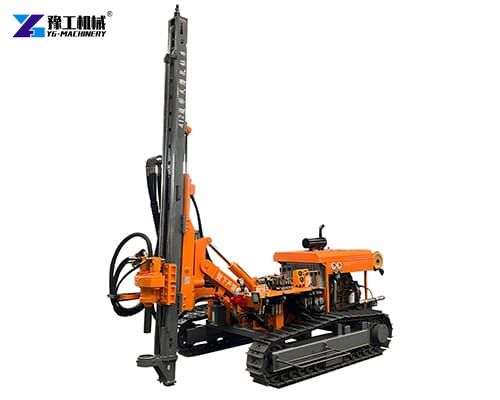
DTH drilling equipment is designed to drill through hard rock with consistent impact energy, reliable hole quality, and efficient material removal. DTH stands for Down-the-Hole, referring to the position of the hammer near the bottom of the borehole. Unlike conventional drilling systems that generate impact energy at the surface, DTH technology delivers impact directly to the drill bit, making it an effective solution for mining, quarrying, water well drilling, and construction projects. There are different configurations for different hole diameters, drilling depths, and working environments. If you are interested in this machine. welcome to contact us, and we will reply to you as soon as possible.
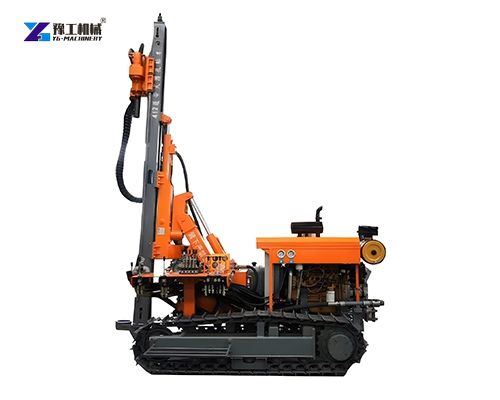
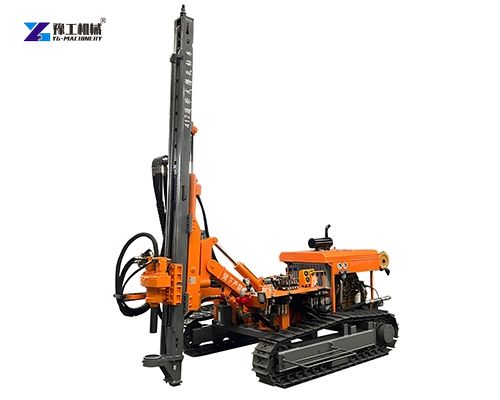
Specifications of the DTH Drilling Equipment
| Main Specifications | YG-412 | YG-416 | YG-420B | YG-420A |
| Feeding method | Hydraulic cylinder + chain | Hydraulic cylinder + chain | Hydraulic cylinder + chain | Hydraulic cylinder + chain |
| Feed total length | 4,600 mm | 5,500 mm | 5,500 mm | 5,880 mm |
| Feed extension | 800 mm | 970 mm | 970 mm | 970 mm |
| Feed travel length | 2,680 mm | 3,670 mm | 3,670 mm | 3,670 mm |
| Feed force max. | 15 kN | 15 kN | 15 kN | 20 kN |
| Feed speed max. | 16 m/s | 26 m/s | 26 m/s | 30 m/s |
| Pullback force max. | 25 kN | 25 kN | 25 kN | 45 kN |
| Hole range | Φ90-115 mm | Φ90-115 mm | Φ90-127 mm | Φ90-138 mm |
| Optimum hole depth | 21 m | 21 m | 21 m | 21 m |
| Drill pipe | Φ60 mm x 2 m | Φ60 mm x 3 m | Φ76 mm x 3 m | Φ76 mm x 3 m |
| Hammer | 3.5″ | 3.5″ | 4″ | 4″ |
| Rotation torque | 1,650 N·m | 2,200 N·m | 2,200 N·m | 3,200 N·m |
| Rotation speed | 100-220 rpm | 0-150 rpm | 0-150 rpm | 60-110 rpm |
| Fuel tank capacity | 115 L | 70 L | 70 L | 70 L |
| Tramming speed max. | 2.5 km/h | 2.5 km/h | 2.5 km/h | 3 km/h |
| Gradeability max. | 25° | 25° | 25° | 25° |
| Ground clearance | 310 mm | 310 mm | 310 mm | 310 mm |
| Track frame oscillation angle | / | ±10° | ±10° | ±10° |
| Traction force max. | 40 kN | 40 kN | 40 kN | 54 kN |
| Weight (w/o Options) | 3,950 | 4,620 | 4,620 | 5,500 |
| Dimensions (LxWxH) | 4,450×2,080×2,460 mm | 5,700×2,130×2,300 mm | 5,700×2,130×2,300 mm | 5,600×2,308×2,500 mm |
| Dust Collection | exist | exist | exist | exist |
How Does DTH Drilling Machine Work?
The working principle of DTH drilling equipment is straightforward. Compressed air travels through the drill pipe to the hammer positioned directly above the drill bit. Inside the hammer, air pressure drives a piston that repeatedly strikes the bit. The bit transfers this impact energy to the rock, breaking it into smaller fragments.
At the same time, the rotary head turns the drill string. Rotation changes the position of the cutting elements between impacts, allowing the bit to break fresh rock rather than repeatedly striking the same point. The feed system applies controlled pressure to keep the bit in contact with the rock face as the hole deepens.
Compressed air also helps carry rock cuttings toward the surface. Effective flushing is essential because accumulated cuttings can reduce drilling efficiency, increase bit wear, and raise the risk of a blocked or stuck drill string.
The overall result depends on several factors working together. A suitable hammer, correctly matched bit, adequate air supply, appropriate rotation speed, and controlled feed pressure are all necessary for efficient operation. A powerful rig alone cannot guarantee high productivity if the supporting components are poorly matched.


Main Components of a DTH Drilling Equipment
Understanding the major components helps operators identify performance problems and allows buyers to compare equipment more accurately.
DTH hammer: The hammer generates repeated impacts at the bottom of the borehole. Its size and operating characteristics must match the required hole diameter, rock conditions, and compressed air supply.
Drill bit: The bit contacts the rock directly and determines the cutting diameter. Bit design, carbide insert arrangement, and wear resistance affect penetration rate, hole quality, and replacement frequency.
Drill pipes: Drill pipes connect the surface drilling system to the downhole hammer. They transmit rotation and feed force while providing a passage for compressed air. Thread compatibility and pipe strength are important when selecting replacement components.
Rotary head: The rotary head supplies the rotation needed for continuous drilling. Appropriate torque and speed help the bit work effectively across different rock formations.
Hydraulic feed system: The feed mechanism advances the drill string and controls the force applied to the bit. Stable feeding helps reduce unnecessary vibration and uneven wear.
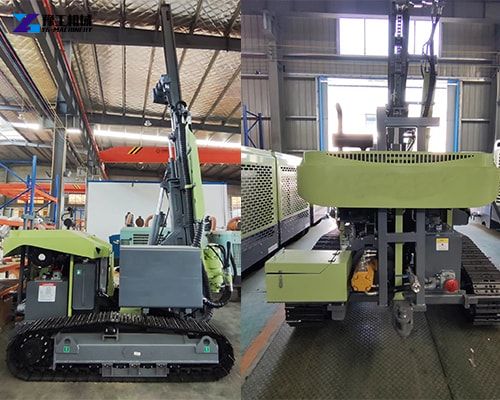
Crawler chassis and drill frame: The chassis supports movement across the job site, while the frame guides the drilling assembly. Their design influences stability, positioning, and accessibility on uneven terrain.
Air and dust management systems: Compressed air drives the hammer and removes cuttings. Where dust collection is installed, it helps control airborne dust and supports a cleaner working environment.


Typical Applications of DTH Drilling Rig
DTH drilling equipment is widely used in industries where hard-rock penetration, repeatable hole placement, and dependable production are important.
Mining and Open-Pit Operations
Mining contractors use DTH drilling rigs to prepare blast holes in suitable rock formations. Consistent hole diameter and depth help drilling teams follow the planned blasting pattern. Reliable drilling performance can also reduce interruptions between drilling, blasting, and material loading.
For mine operators, the correct machine should match the planned hole dimensions, rock hardness, daily production requirements, and site layout. Long operating hours make fuel consumption, maintenance access, and consumable life particularly important.
Quarrying and Stone Production
Quarries require drilling equipment that can operate consistently under abrasive conditions. DTH rigs are used to prepare holes for controlled blasting and other rock extraction activities.
A suitable machine can help maintain a repeatable drilling pattern while reducing unnecessary movement between holes. Buyers should consider the quarry’s rock type, production schedule, bench height, and dust control requirements before choosing a model.
Road Construction and Slope Stabilization
Road projects often require drilling in exposed rock, steep slopes, and areas with restricted access. DTH equipment can be used for suitable rock drilling tasks associated with slope stabilization, anchoring, drainage, and infrastructure preparation.
For these applications, mobility and accurate positioning can be as important as raw drilling output. Contractors should confirm the machine’s ability to operate safely within the available working space.
Foundation and Civil Engineering
Construction projects may require holes for rock anchors, grouting, foundation preparation, and other ground engineering activities. DTH drilling can be effective when the borehole passes through hard rock.
However, not every foundation project is suitable for a standard DTH rig. Soil composition, borehole stability, casing requirements, vibration limits, and nearby structures should be evaluated before selecting the drilling method.
Core Performance Factors That Affect Drilling Efficiency
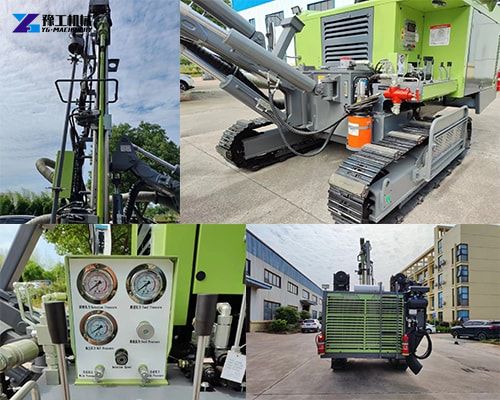
The performance of DTH drilling equipment should be evaluated as a complete system rather than by a single specification.
Penetration Rate
Penetration rate describes how quickly the machine advances through the formation. It depends on rock hardness, fracture patterns, bit condition, hammer performance, air supply, and operating settings.
Higher drilling speed can improve productivity, but the fastest initial penetration does not always produce the lowest cost per completed hole. Excessive feed pressure or an unsuitable bit may accelerate wear and create additional downtime. A balanced operating setup is usually more valuable than maximizing one performance figure.
Drilling Accuracy and Hole Quality
Hole direction, diameter consistency, and depth control influence the quality of the finished borehole. These factors are particularly important in blasting, anchoring, and foundation applications.
A stable drill frame, appropriate feed control, correct bit selection, and careful positioning help operators maintain the intended drilling path. Geological conditions still matter: fractured rock, changing strata, and voids can affect hole deviation even when the machine is operated correctly.
Rotation Torque and Speed
Rotation torque helps the bit turn under load, while rotation speed influences how the cutting elements engage with the formation. The correct combination varies with bit diameter, hammer type, and rock characteristics.
Excessive rotation can increase wear without improving penetration. Insufficient rotation may reduce cutting efficiency and cause the bit to work unevenly. Operators should follow the equipment manufacturer’s recommended operating range and adjust settings according to field conditions.
Feed Force and Pullback Capacity
The feed system applies force to maintain contact between the bit and rock. Appropriate feed force supports efficient impact transfer, while excessive pressure can contribute to premature wear or mechanical stress.
Pullback capacity is also important because the drill string must be withdrawn safely after drilling. It can affect how effectively the machine handles the tools and rods used in a particular operation. Buyers should assess both functions rather than comparing forward feed performance alone.
Mobility and Site Adaptability
Crawler-mounted DTH drilling rigs are useful on many uneven or unpaved job sites. A suitable chassis helps the machine move between drilling positions without relying on a separate transport method for every short relocation.
Ground clearance, machine dimensions, travel speed, frame adjustment, and overall stability influence practical site performance. These factors deserve particular attention when working in quarries, mountainous areas, and infrastructure projects with limited access.


Advantages of Down the Hole Drilling Machine
Effective Rock Breaking
The main advantage of DTH technology is that impact energy is generated close to the rock face. This reduces the need to transmit percussion energy along the entire drill string, making the method particularly useful for suitable hard-rock applications.
The direct impact principle can support consistent drilling performance as the hole deepens, although actual results depend on the hammer, air supply, formation, and operating conditions.
Manageable Operating Costs
The total operating cost of the DTH drilling equipment includes more than the purchase price. Fuel, compressor operation, drill bits, hammers, drill pipes, labor, maintenance, and downtime all contribute to the final cost per hole.
A properly matched DTH system can help reduce avoidable wear and improve productive operating time. Buyers should compare expected operating costs over the machine’s service life rather than focusing only on the initial investment.
Practical Operation and Maintenance
Hydraulic controls and integrated machine systems can simplify routine drilling operations. Clear access to service points, replaceable wear components, and readily available spare parts can also reduce maintenance delays.
Actual service requirements vary by machine design and working environment. Regular inspection and correct operating procedures remain essential for dependable performance.
How to Choose the Right Down the Hole Drilling Rig?
Choosing a suitable DTH drilling equipment starts with the project requirements, not the machine name or advertised power rating.
Confirm the Required Hole Diameter and Depth
Establish the normal and maximum hole dimensions before comparing models. The rig, hammer, bit, and drill pipe must be compatible with the planned borehole size and depth.
Evaluate the Rock Formation
Rock hardness, abrasiveness, fracture patterns, and changes in geological layers all influence drilling performance. A configuration that works well in one quarry may deliver different results in another.
Check the Complete Air Supply System
Compressed air is essential to pneumatic DTH drilling. Buyers should verify that the compressor can provide the required pressure and air volume under actual operating conditions.
Compare Total Cost of Ownership
A low purchase price does not necessarily mean a lower operating cost. Compare fuel consumption, expected consumable life, maintenance intervals, spare parts availability, warranty coverage, and service support.
Consider Transport and Site Conditions
Check machine dimensions, operating weight, ground clearance, travel capability, and loading arrangements. A rig that performs well in an open quarry may be less practical on a confined construction site.