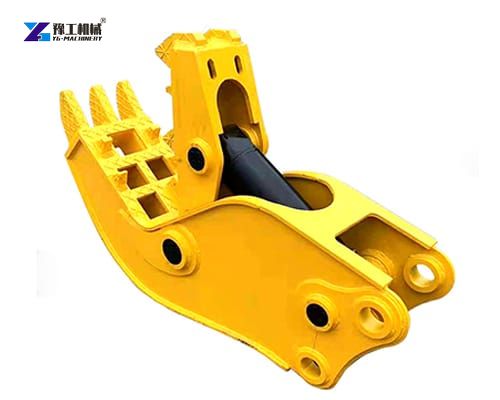
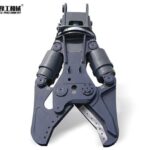
Concrete pulverizer attachment for excavator is one of the most practical tools in modern demolition and recycling work. If your job involves breaking down old concrete structures, removing steel rebar, or turning waste concrete into reusable material, this attachment can save you a great deal of time, fuel, and money. Unlike a hydraulic breaker that simply smashes concrete into fragments, a pulverizer bites into the structure and crushes it in a controlled way. It also separates the steel rebar from the concrete at the same time, which makes sorting and recycling much easier. There are various models for 6-9 ton excavators to 50-80 ton excavators. If you are interested in this excavator attachment, welcome to contact us for more detailed information.
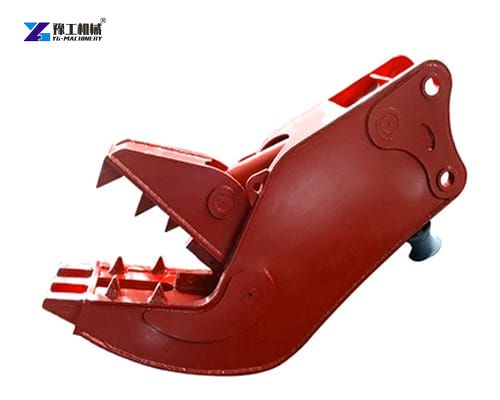
Parameters of Concrete Pulverizer Attachment for Excavator
| Model | Unit | YG400 | YG600 | YG800 | YG1000 | YG1700 |
| Total length | mm | 1642 | 1895 | 2168 | 2218 | 3150 |
| Total width | mm | 1006 | 1275 | 1376 | 1598 | 2100 |
| Blade length | mm | 120 | 150 | 180 | 200 | 240 |
| Max Opening Height | mm | 587 | 718 | 890 | 1029 | 1400 |
| Upper Jaw Width | mm | 215 | 280 | 290 | 380 | 400 |
| Lower Jaw Width | mm | 458 | 586 | 588 | 720 | 812 |
| Max Shear Force | kn | 380 | 650 | 1650 | 2250 | 2503 |
| Working Pressure | Bar | 280 | 320 | 320 | 320 | 320 |
| Weight | kg | 670 | 1350 | 1750 | 2750 | 4709 |
| For Excavator Weight | ton | 6-9 | 10-15 | 18-26 | 26-30 | 50-80 |
How Does a Concrete Pulverizer Attachment Work?
It connects directly to the hydraulic system of your excavator. When you press the control lever, hydraulic oil flows into the cylinder on the attachment, and the upper jaw closes against the lower jaw with strong force. This pressing motion is what gives the tool its crushing power. The jaws are fitted with replaceable blades that do the cutting and crushing work. These blades are made of strong steel, so they can handle hard concrete and worn rebar day after day. What makes a pulverizer special is the way it grips the material. The jaws open wide to catch a concrete beam, a wall panel, or a pile of broken slabs. Then they close slowly and steadily, crushing the concrete between the blades. As the pressure builds, the concrete cracks and breaks apart, while the steel rebar inside is bent and pulled out. Because the motion is powered by the excavator’s own hydraulic pressure, the tool is strong yet easy to control.
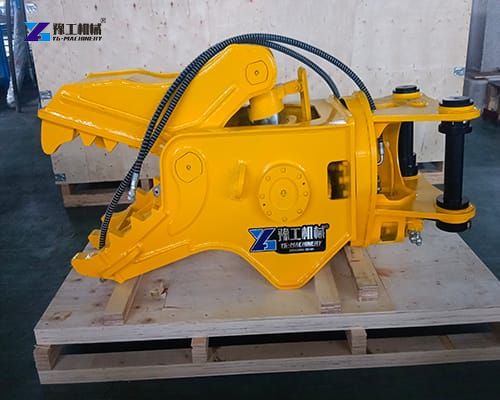
Common Application Scenarios for Excavator Mounted Concrete Pulverizers
The value of a concrete pulverizer attachment for excavator shows up across a huge range of real-world jobsites, far beyond just full-scale building demolition.
Primary structural demolition: It is ideal for taking down low-rise buildings, concrete factory beams and columns, bridge decks, and foundation slabs, where you need to break reinforced concrete without sending shockwaves that damage adjacent intact structures. This makes it a top choice for renovation projects in dense urban areas.
Secondary material reduction and recycling: After initial demolition work, you can use the pulverizer to process large broken concrete chunks on-site into small, uniform aggregate that can be reused immediately as backfill for trenches, sub-base for new roads, or raw material for new concrete mixes, cutting out the cost of hauling waste to a landfill and buying new fill material.
Rebar recovery and sorting: The built-in shear blades cut long, tangled rebar into short, manageable lengths that are easy to bundle and sell to metal recycling yards, turning what used to be a messy waste product into a steady secondary revenue stream for your team.
Confined space and indoor demolition: In tight jobsites like basement renovations, interior strip-out projects, or narrow alleyways where large demolition machines cannot fit, a compact pulverizer mounted on a mid-size excavator can work safely without creating the overspray and flying debris that comes with handheld breakers.
Road and infrastructure maintenance: It works perfectly for breaking up old concrete road surfaces, damaged curb sections, and outdated drainage structures, without damaging the underlying sub-base or nearby utility lines.
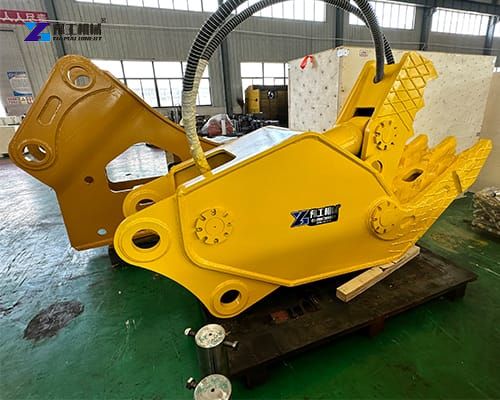
Advantages of the Excavator Pulverizer Attachment
Investing in a concrete pulverizer attachment for excavator provides clear operational and economic benefits over traditional demolition methods:
- Higher Processing Speed: Compared to hydraulic breakers, which point-break concrete slowly, pulverizing jaws crunch through large surface areas in seconds, significantly accelerating site clearing.
- Clean Separation of Steel and Concrete: Producing clean steel scrap yields higher market prices at recycling yards, while clean aggregate avoids contamination penalties at landfill sites.
- Reduced Transport and Disposal Costs: Crushing bulky debris into compact material allows trucks to haul maximum payload weight rather than light, hollow volumes of raw rubble.
- Enhanced Site Safety: Automating rebar cutting and concrete reduction inside the excavator cab eliminates the need for manual ground crews operating torches or hand-held saws near unstable piles.
- Lower Fuel Consumption Per Ton: Efficient jaw geometry crushes material quickly per stroke, reducing engine load and optimizing fuel usage per ton of processed material.
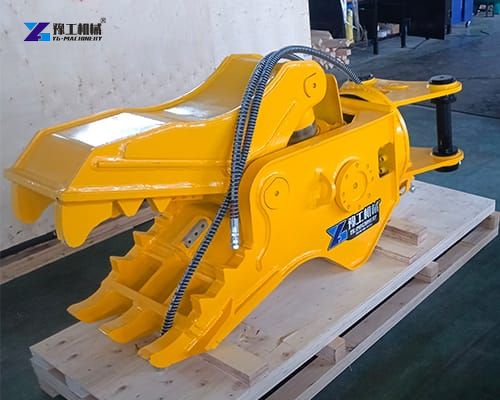
Core Performance Features That Define Reliable Pulverizer Attachments
First, the maximum shear force and crushing force at the jaw tip directly determine how thick a reinforced concrete section the unit can handle without stalling or damaging the hydraulic cylinder. A well-calibrated force distribution means the highest pressure is concentrated right at the tip of the jaws, where you need it most to crack thick concrete, instead of wasting force further back along the jaw body.
Second, the jaw opening height and jaw width dictate how large a concrete block you can fit inside the jaws in a single bite. A larger opening lets you grab full sections of thick foundation or large rubble chunks without having to pre-break them with a separate breaker, which cuts down your total cycle time per piece of material.
Third, the blade length and blade material quality determine how long your shear edges will last before they need sharpening or replacement. High-strength, heat-treated alloy steel blades stay sharp through thousands of rebar cuts. Most good designs let you reverse or replace the blades on-site without sending the whole attachment back to a workshop, which minimizes downtime.
For reference, the full range of these attachments is built to match excavators from 6 tons all the way up to 80 tons, with working pressures that stay consistent across all standard carrier hydraulic systems. Even the mid-size models built for 18 ton to 26 ton excavators deliver more than enough force to handle most common residential and light commercial demolition jobs, making them a perfect fit for the most popular excavator sizes in most general construction fleets.
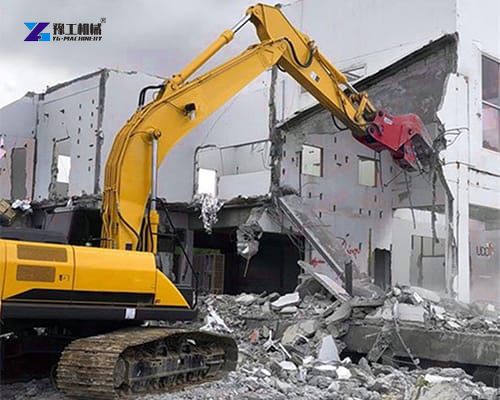
Buying Guide: How to Choose the Right Pulverizer
Purchasing the right concrete pulverizer attachment for excavator involves matching technical requirements with site conditions:
- Verify Excavator Operating Capacity: Ensure the total attachment weight stays within the carrier’s safe working load limit at full reach.
- Assess Hydraulic Oil Flow and Pressure: Match auxiliary hydraulic pump output (L/min) and circuit relief pressures (Bar) to the attachment’s rated operating parameters.
- Evaluate Material Characteristics: Determine the average thickness of concrete and density of internal rebar to select appropriate jaw opening heights and shearing forces.
- Choose Mechanical vs. Hydraulic Rotation: Fixed/non-rotational models offer robust simplicity and lower cost, while 360-degree hydraulic rotation models provide enhanced positioning agility in tight spaces.
- Consider Spare Part Availability: Ensure ready access to replacement teeth, cutting blades, pin kits, and seal kits to avoid unnecessary project downtime.
Recommended Related Demolition & Handling Equipment
To build a fully versatile mobile crushing and recycling setup, consider expanding your fleet with these complementary attachments:
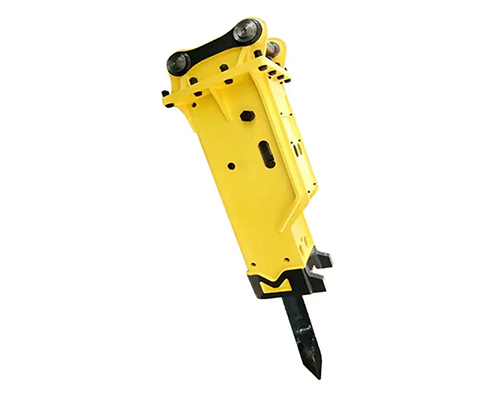
- Hydraulic Demolition Breakers / Hammers: Ideal for primary concrete fracturing and breaking up hard rock before fine processing.
- Excavator Demolition Shears: Specialized attachments engineered for cutting through steel beams, pipe networks, and structural metal framework.
- Hydraulic Scrap & Sorting Grapples: Perfect for fast site clearing, loading crushed aggregate, and sorting loose metals into transport containers.
- Excavator Crusher Buckets: Excellent for secondary on-site crushing of brick, stone, and unreinforced concrete directly into ready-to-use gravel.