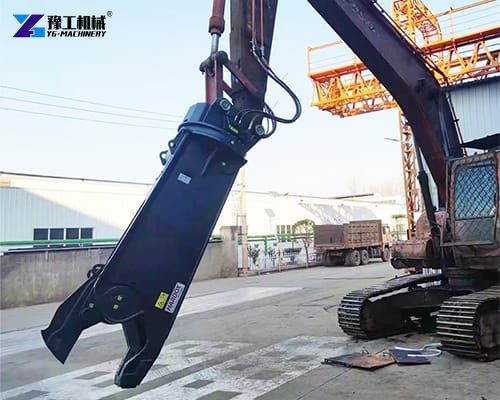
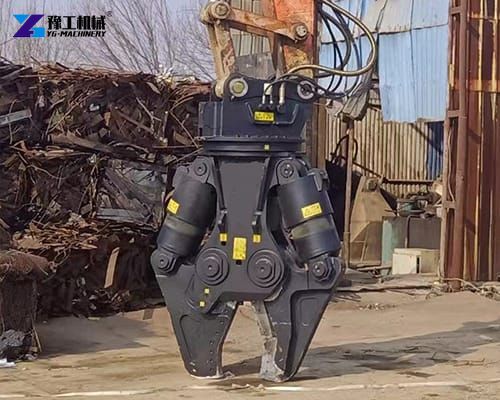
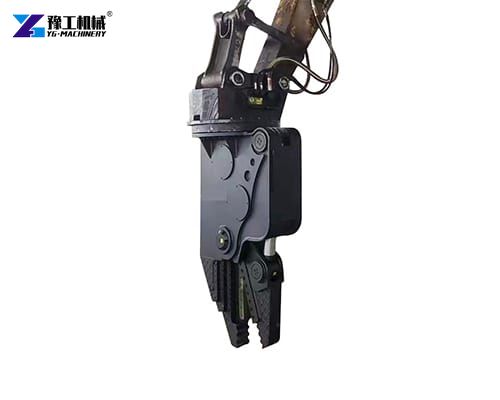
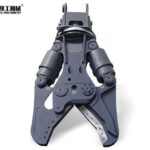
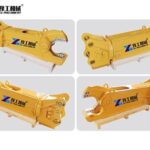
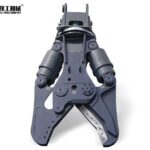
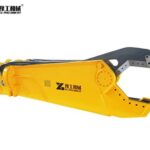
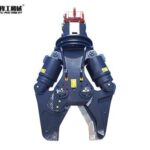
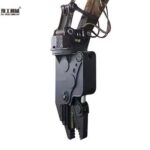
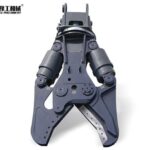
Hydraulic demolition shears have become one of the most important attachments in the construction, demolition, recycling, and scrap processing industries. The hydraulic shears for excavators are designed to cut steel structures, reinforced concrete, pipelines, and heavy metal components. These powerful attachments significantly improve productivity while reducing labor costs and enhancing job site safety. When selecting a hydraulic shear attachment, we often face a critical decision: should we choose a single-cylinder hydraulic shear or a double-cylinder hydraulic shear? While both are designed for heavy-duty cutting applications, they differ in structure, cutting force distribution, maintenance requirements, operating efficiency, and ideal working conditions. Understanding the differences between these two designs helps us to make the right investment based on our operational needs.
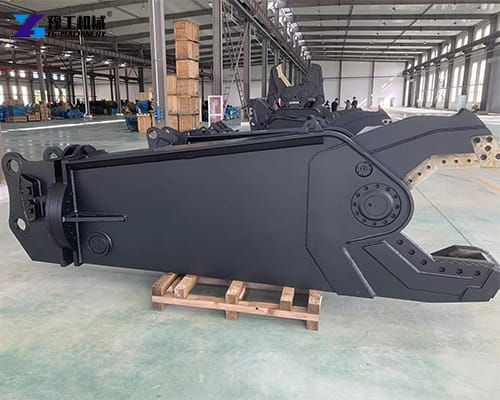
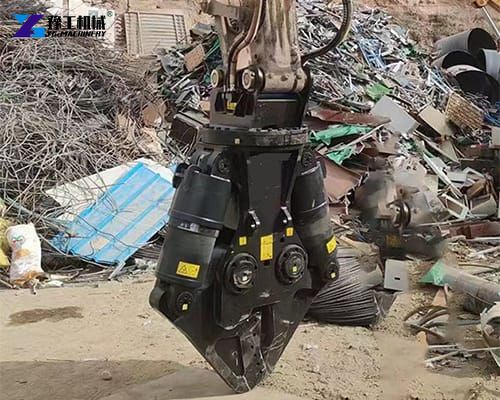
Brife Difference Between Single-Cylinder and Double-Cylinder Types
Single-cylinder hydraulic demolition shears: A single hydraulic ram powers the cutting jaw and the closing force. This design tends to be lighter, simpler, and more economical. It excels in steady, continuous cutting tasks and light to mid-heavy debris.
Double-cylinder hydraulic shears: Two rams or a paired system provide extra closing force and improved jaw stability. They’re built for tougher, denser material and faster cycle times, especially when you need to crush and cut aggressively in one pass.
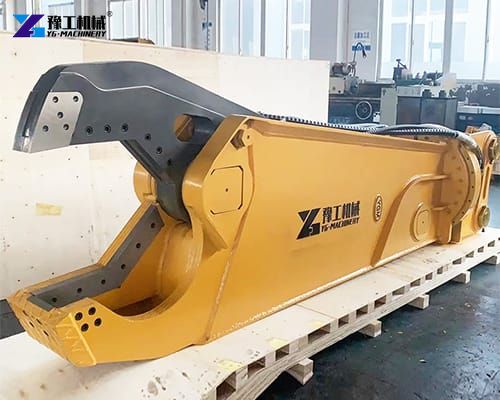
Single-Cylinder Excavator Hydraulic Shears
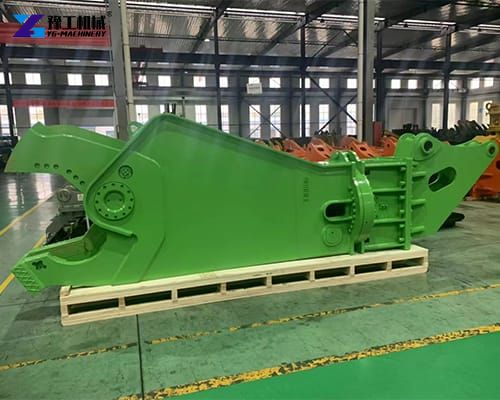
A single-cylinder hydraulic demolition shear utilizes a single, high-capacity hydraulic cylinder to drive the cutting jaw against a fixed or secondary jaw. This configuration represents one of the most common and classic designs in heavy scrap cutting and structural steel dismantling.
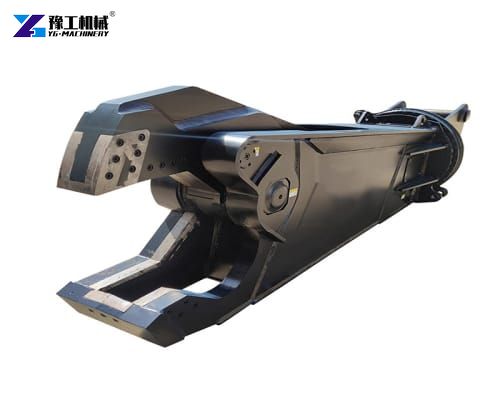
Parameters of Single Cylinder Hydraulic Demolition Shear
| Model | YG50R | YG100R | YG130R | YG180R | YG310R | YG410R |
| Forearm mounted model | 6-9T | 10-12T | 13-17T | 18-27T | 28-39T | 39-50T |
| Large arm installation model | 4-6T | 7-10T | 8-12T | 14-18T | 20-28T | 28-39T |
| Work pressure | 35Mpa | 35Mpa | 35Mpa | 35Mpa | 35Mpa | 35Mpa |
| Overall length | 2000mm | 2200mm | 2300mm | 2900mm | 3500mm | 3900mm |
| Overall weight | 650KG | 1100KG | 1220KG | 2100KG | 3300KG | 4700KG |
| Maximum opening | 290mm | 375mm | 375mm | 445mm | 565mm | 670mm |
| Throat depth | 290mm | 395mm | 395mm | 525mm | 630mm | 720mm |
| Front-end crushing force | 46T | 60T | 60T | 85T | 135T | 172T |
| Central crushing force | 115KN | 150KN | 150KN | 221KN | 351KN | 464KN |
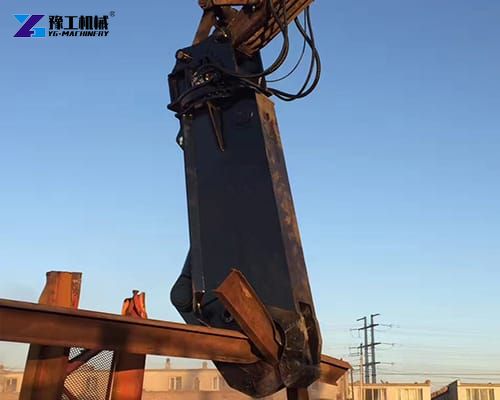
How Single-Cylinder Shears Work?
The core mechanics of a single-cylinder hydraulic demolition shears center around a single large-bore hydraulic piston. When hydraulic oil enters the cylinder, the piston extends, pushing the movable upper jaw downward with immense force toward the lower fixed jaw. Because all hydraulic pressure is concentrated into one massive cylinder, single-cylinder shears are renowned for producing deep, concentrated piercing and cutting power at specific points of contact.
Structural Characteristics of the Single-Cylinder Excavator Shear
- Single Large Hydraulic Piston: Features a heavy-duty cylinder designed to handle high pressure, often paired with speed valves or speed-up valves to decrease cycle times.
- Rigid Main Frame: Built around a heavy steel chassis with a sturdy pivot pin that absorbs torsional stress during heavy cutting operations.
- Fixed Lower Jaw and Moving Upper Jaw: The upper jaw houses the primary cutting blades, while the lower jaw acts as the guiding anvil and support base for the material being sheared.
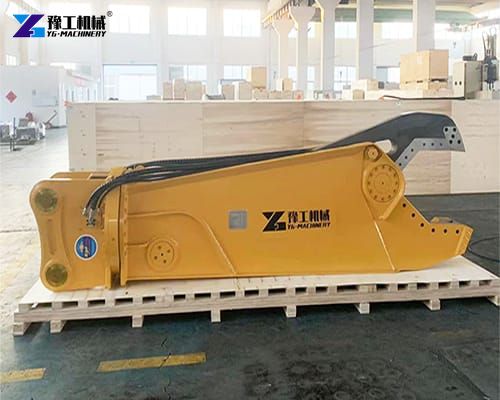
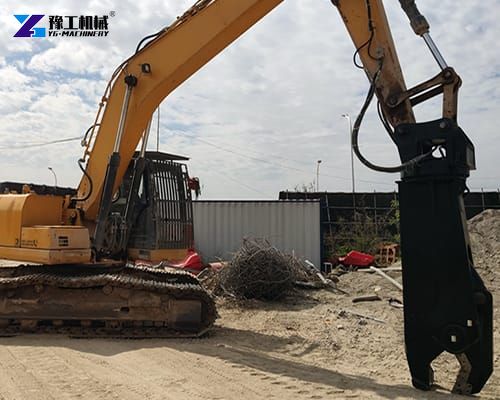
Advantages of Single-Cylinder Hydraulic Shears
Higher Peak Piercing Force: Concentrating the entire hydraulic power of the excavator into a single large-diameter cylinder generates exceptional peak cutting force. This makes single-cylinder shears particularly effective at piercing thick steel plates and heavy industrial H-beams.
Simpler Hydraulic Circuitry: With only one cylinder to actuate, the hydraulic system requires fewer hoses, valves, and seal kits. This structural simplicity translates to fewer potential points of hydraulic leak or pressure loss.
Durable and Compact Profile: Single-cylinder shears often feature a narrower overall profile, allowing operators to maneuver the attachment into tight structural openings or narrow scrap piles.
Lower Initial Purchase and Maintenance Costs: Because there are fewer moving hydraulic parts, single-cylinder units generally carry a lower manufacturing cost and lower long-term spare parts expenditure.
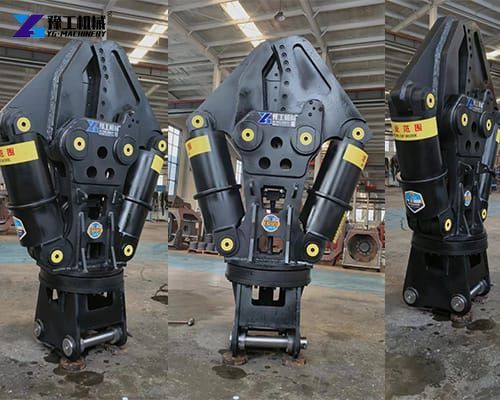
Double-Cylinder Hydraulic Demolition Shears
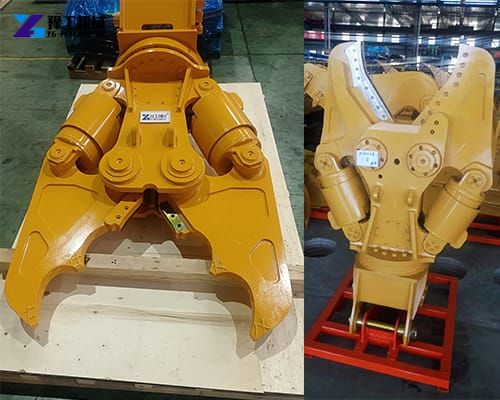
A double-cylinder hydraulic demolition shear utilizes two synchronized hydraulic cylinders to drive both jaws simultaneously or to deliver balanced dual-piston force across the cutting area. This design is widely favored in primary and secondary concrete demolition, building dismantling, and versatile scrap sorting.
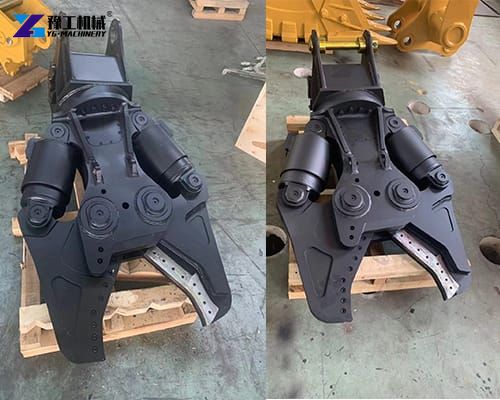
Double Cylinder Hydraulic Demolition Shear Specifications
| Model | YGD280 | YGD380 | YGD480 |
| Suitable Excavator | 22-27T | 28-36T | 37-45T |
| Weight | 2650KG | 3850KG | 4540KG |
| Blade Length | 400+260mm | 350+360mm | 350+360mm |
| Working Pressure | 320bar | 330bar | 330bar |
| Length | 2380mm | 2700mm | 3655mm |
| Opening | 855mm | 780mm | 780mm |
| Cut Depth | 685mm | 650mm | 650mm |
| Shear Force | 1360KN | 2940KN | 2940KN |
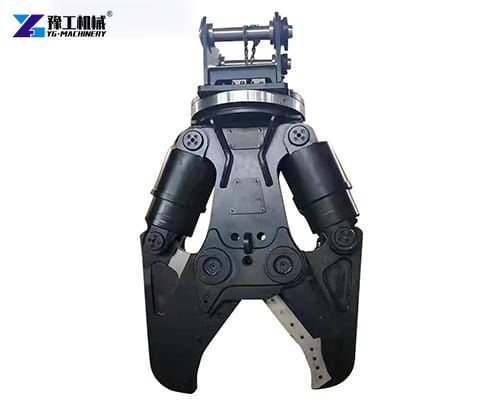
How Double-Cylinder Shears Work
In a double-cylinder system, two hydraulic pistons work in tandem. Equal hydraulic pressure is distributed to both cylinders simultaneously via a specialized flow-divider valve or synchronized hydraulic circuit. Depending on the specific jaw design, either both jaws move inward toward each other, or two powerful cylinders drive a wide-opening jaw set with balanced structural reinforcement.
Double Cylinder Hydraulic Delimontion Shear Structural Characteristics
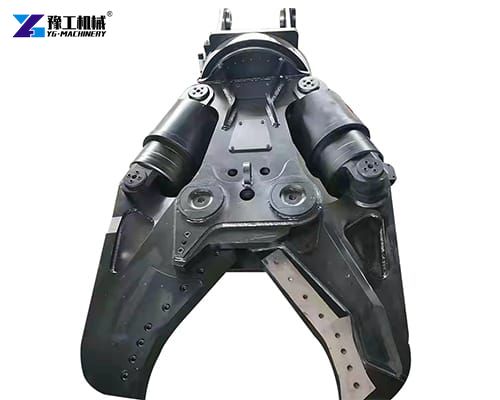
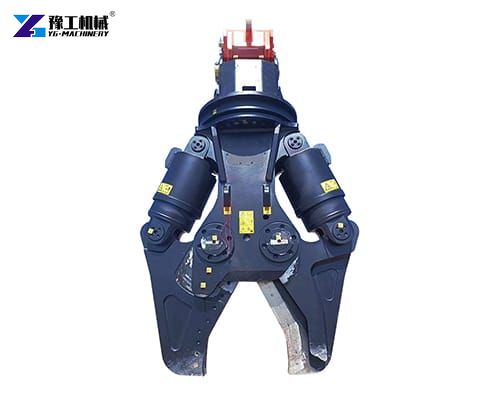
- Dual Hydraulic Pistons: Positioned symmetrically on either side of the shear body to equalize force distribution.
- Synchronized or Double-Moving Jaws: Both jaws close in a smooth, scissor-like action, wrapping around structural members or concrete blocks.
- Wide Jaw Opening and Large Throat Area: The dual-cylinder architecture allows for a wider maximum jaw opening relative to total attachment weight.
Advantages of Double-Cylinder Hydraulic Shears
Balanced Mechanical Stress: By spreading the workload across two hydraulic cylinders, stress is evenly distributed across the pivot frame. This drastically reduces lateral twisting, pin wear, and structural frame fatigue.
Faster Cycle Times and Higher Grab Efficiency: Dual moving jaws clamp down on materials faster and automatically center the target material in the throat of the shear. Operators spend less time positioning the shear before making a cut.
Superior Material Handling and Crushing Capability: Double-cylinder hydraulic demolition shears attachments excel not only at shearing steel but also at crushing reinforced concrete, grabbing debris, and sorting demolition rubble on active jobsites.
Enhanced Excavator Balance: The symmetrical layout distributes weight evenly, improving carrier stability when operating at extended reach or high angles on high-reach demolition excavators.
When to Pick Single-Cylinder Vs. Double-Cylinder for Demolition Jobs
Choose single-cylinder hydraulic shears when:
- You’re working in confined spaces (narrow shafts, tight corridors, urban renovation)
- The material is moderately reinforced or made of lighter steel angles and channels
- You need lower upfront cost and easier serviceability
- You value nimble handling and quicker setup/removal of attachments
Choose double-cylinder hydraulic demolition shears when:
- You face thick, heavy, or highly reinforced steel structures
- Speed matters and you need aggressive cutting in few passes
- You’re performing batch demolition on large projects with repetitive, tough cycles
- Reliability under high-load conditions is critical to keep the job on schedule
Key Performance Factors to Compare
- Opening width and jaw design: Wider jaws can handle bigger chunks; jaw geometry affects grip and durability.
- Cutting force: Measured in tonnage or KN, this is the critical number in heavy material tasks.
- Speed and cycle time: How fast the jaw opens and closes; faster cycles boost productivity on dense debris.
- Weight and balance: Heavier tools demand more capable carriers and can limit maneuverability.
- Hydraulics and seals: Double-cylinder configurations push more hydraulic load, so quality seals and robust pumps matter.
- Maintenance footprint: More cylinders mean more seals, more hoses, and more potential leak points.
Industry Applications – Which Hydraulic Demolition Shear Belongs on Your Jobsite?
Choosing between single-cylinder and double-cylinder hydraulic shears ultimately comes down to the primary materials you process and your everyday jobsite conditions.
Ideal Applications for Single-Cylinder Hydraulic Shears
- Heavy Metal Scrap Yards: Cutting thick I-beams, steel plate, ship hulls, railway cars, and heavy industrial machinery scrap.
- Dedicated Steel Demolition: Dismantling oil refineries, power plants, chemical storage tanks, and steel bridge structures where thick steel cutting is the primary task.
- Stationed Processing Operations: Heavy processing lines where the shear remains mounted on a dedicated heavy-duty excavator for continuous long-term steel shearing.
Ideal Applications for Double-Cylinder Hydraulic Shears
- Urban Building Demolition: Primary dismantling of concrete structures, floor slabs, brick masonry, and embedded rebar networks.
- High-Reach Demolition: Mounted on long-reach or high-reach demolition excavators where weight balance, low vibration, and wide jaw opening are mandatory.
- General Contracting and Recycling: Jobsites requiring a combination of concrete crushing, steel cutting, timber snapping, and debris sorting.